SpaceFest, Kitt Peak, Lowell Observatory, Meteor Crater

Gene Cernan & myself

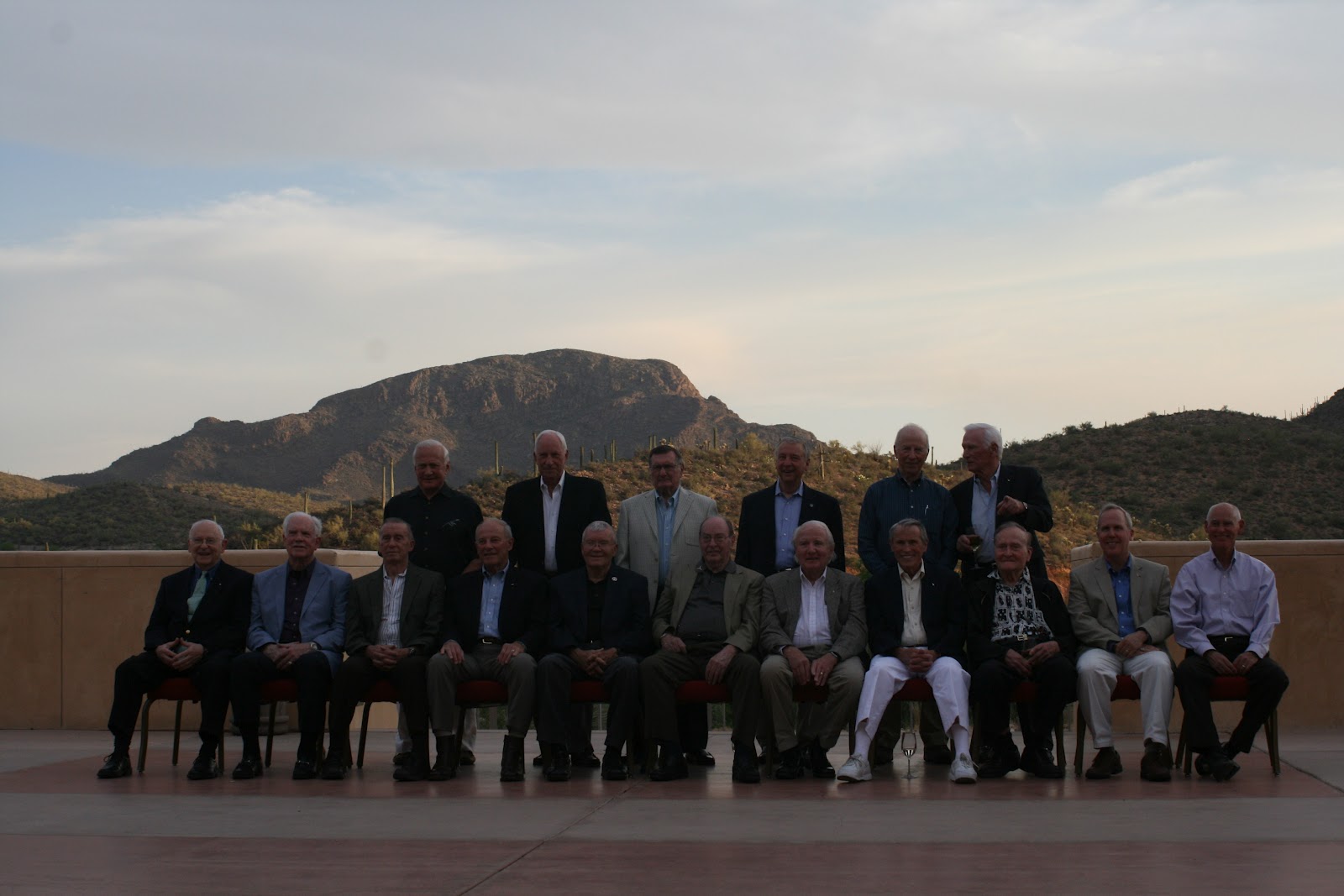
I attended SpaceFest IV, in Tucson, Arizona, which took place 1-3rd June 2012. Guests included many of the Apollo astronauts, some shuttle astronauts, mission specialists and principal investigators of space missions, along with other space media personalities. There were three tracks of talks and meals with the astronauts.

Back: Buzz Aldrin, Al Worden, Richard Gordon, Charlie Walker, Paul Weitz, Gene Cernan
 Front: Alan Bean, Dave Scott, Walt Cunningham, Jack Lousma, Fred Haise, Ed Mitchell
Vance Brand, Ed Gibson, Dale Cox,Tom Jones, Mike Mullane

We arrived a few days early and enjoyed tours to Mount Lemmon, Biosphere 2 and the telescope mirror lab at the University of Arizona.  After SpaceFest, we managed to visit Lowell Observatory, where Pluto was discovered, Meteor Crater, Kitt Peak Observatory and the Pima Air and Space Museum.

The event was overwhelmingly amazing. I co-wrote some articles with Nick Howes, science writer for ESA and Programme Manager for the Faulkes Telescope, which can be read in the next issue of “Popular Astronomy“, which you can obtain by joining the Society for Popular Astronomy for just £18.00.

ISS Symposium: Charles Bolden

Future use of the ISS
for Human Exploration: Charles Bolden (NASA Administrator)
“Throughout history, nations have always explored in order
to develop humankind. Exploration drives technological breakthroughs that
benefit all of society. The ISS is there to advance us further…but if we are
not tangentially relevant, not improving life on Earth, then we are missing the
boat, and we need to help remind everyone that we are trying to make life
better for people here on Earth. In doing so, we improve our ability to
explore.”

Charles Bolden
Photo credit: Remco Timmermans
These were Charles Bolden’s opening words, at the
International Space Station (ISS) Symposium in Berlin on Friday 4, May.
Charles Bolden, NASA Administrator, set out President Obama’s
goals of visiting an asteroid by 2025 and landing on Mars by the mid-2030s, which
give a very short time frame considering all that we need to learn and achieve
before then. He cited the ISS as an extremely important stepping stone in order
to get there. A full permanently crewed ISS, and the mature ISS partnership
between ESA, JAXA, Roscomos, NASA and CSA, are assets unprecedented in the
history of human space exploration.
Naming the ISS the most technologically advanced achievement
of human kind, ahead of the space shuttle, he expressed the desire to make it
possible for more humans to visit it so they can see how incredible it is.
“A key component to our exploration strategy and utilisation
of this unique asset that we call the space station provides us with tools to
face processes that we will find far from low earth orbit. It will allow us to
simulate long flight duration analogues, addressing complexities and risks
associated with these missions.”

He mentioned some of the problems recently detected in
astronauts, like the loss of visual acuity, were not anticipated by medical
science. This has opened up the need for further experiments in other
gravities, perhaps the lower gravity of the moon, not just micro-gravity: “Is a
crew member going to come back having lost their vision? It’s not a minor
consideration. It’s been injected into the equation in the last twelve months.
Summarising the themes expressed across the two days of
talks, he stressed the ISS is a unique zero-gravity test bed platform, which
allows us to test new exploration technologies, and carry out scientific experiments
by removing gravity from the equation, which cannot be done on Earth. The net
needs to be cast as far as possible in looking for non-traditional partners to
bring in a wide range of experiments.

Charles Bolden
Photo credit: Remco Timmerman

 When asked about America’s engagement in a next generation
ISS, he replied:

“The ISS cannot be the only destination in low earth orbit;
private enterprise needs to create other destinations where we all can go. I
think it is really important as I see them as a commercial capability to enhance
the vitality of any nation, to grow business. I’m a free enterprise guy; the
way we open up business is by encouraging industry to build the next generation
missions.”
Over 250 delegates were invited to attend the ISS Symposium,
titled “Research in Space for the Benefit of Humankind”, representing all of
the partner countries and more. Scientific results to date as well as plans for
the future were discussed in detail over two days of presentations and
roundtable discussions. The feeling was that the conference had successfully
demonstrated the rich, diverse benefits of the ISS, and that the convergence of
ideas and objectives amongst the partners will continue to be key to its
future.
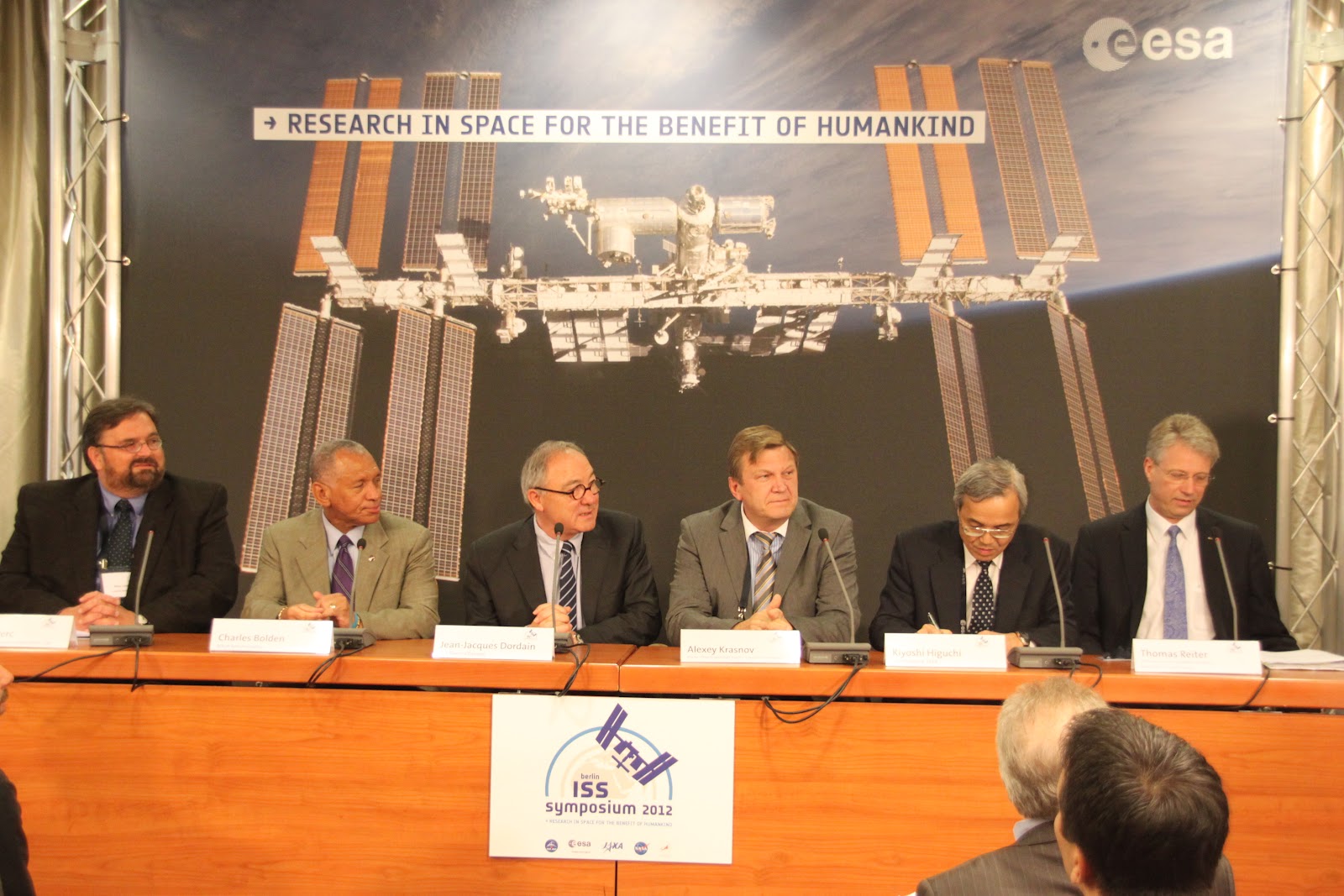
The press conference: (from left to right) G. Leclerc (CSA), C. Bolden (NASA), 
J-J. Dordain (ESA), A. Krasnov (Roscosmos), K. Higuchi (JAXA) and T. Reiter (ESA)
Photo credit: Remco Timmermans
Later in the press conference, Bolden stated his two
messages to take away:
  1. I hope you have seen clear
    evidence of research and value from the ISS making life better on earth
  2. The incredible value of
    the partnership is what makes ISS valuable, the partnership which has
    grown and matured over 11 years without any interruption. 
“It’s easy to do things by yourself; it’s really hard to do
things in co-operation with others, but I think that’s one of the triumphs of
the ISS.”

Further reading: “ISS: Benefits for Humanity” 

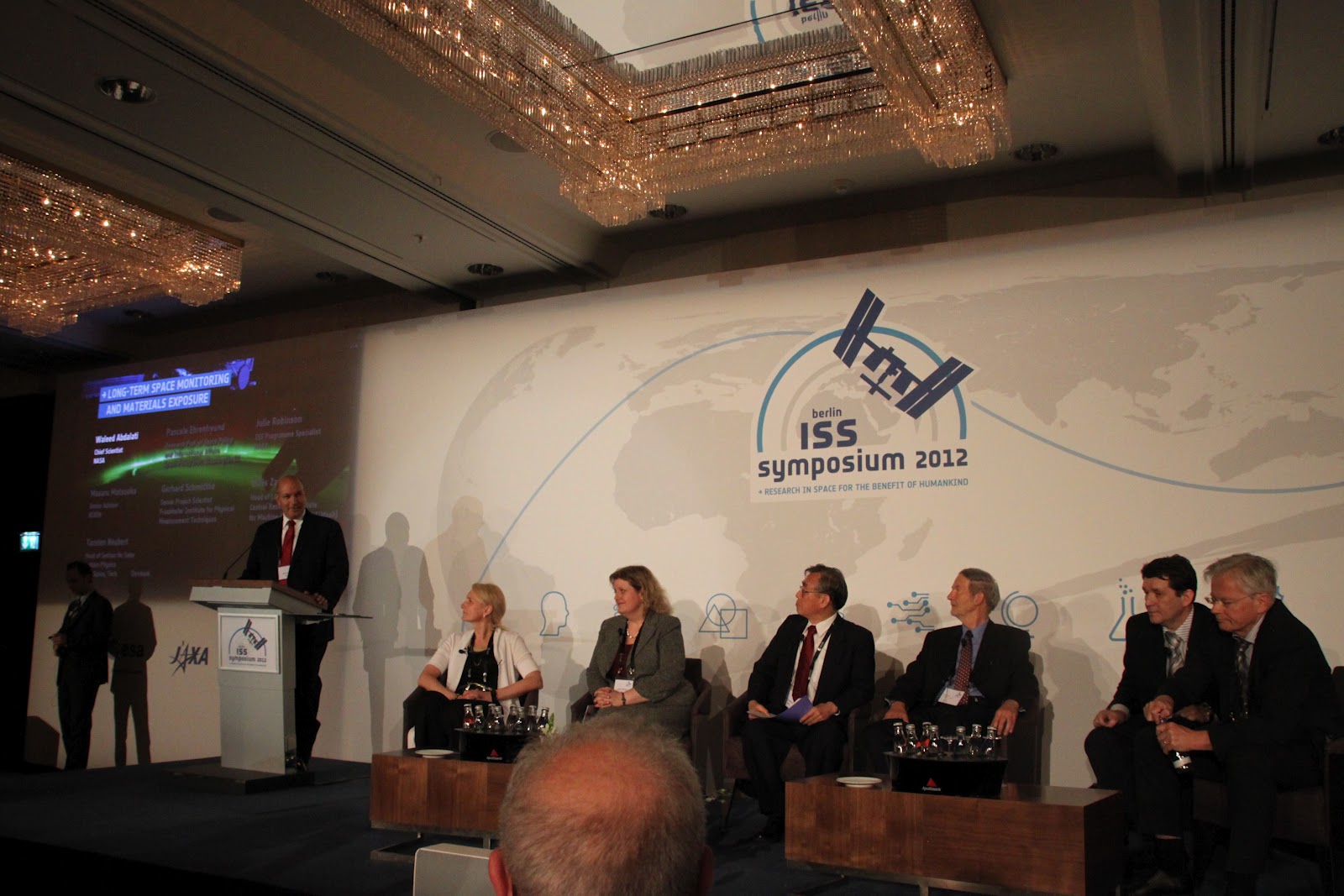
ISS Symposium: Long-term Space Monitoring & Exposure


The International Space Station (ISS) Symposium titled
“Research in Space for the Benefit of Humankind” was held in Berlin, Germany
from 2-4 May, 2012. Over 250 delegates were invited to attend, representing all
of the ISS partners and more. This session looked at past and future science
carried out on the ISS concerned with long-term space monitoring.

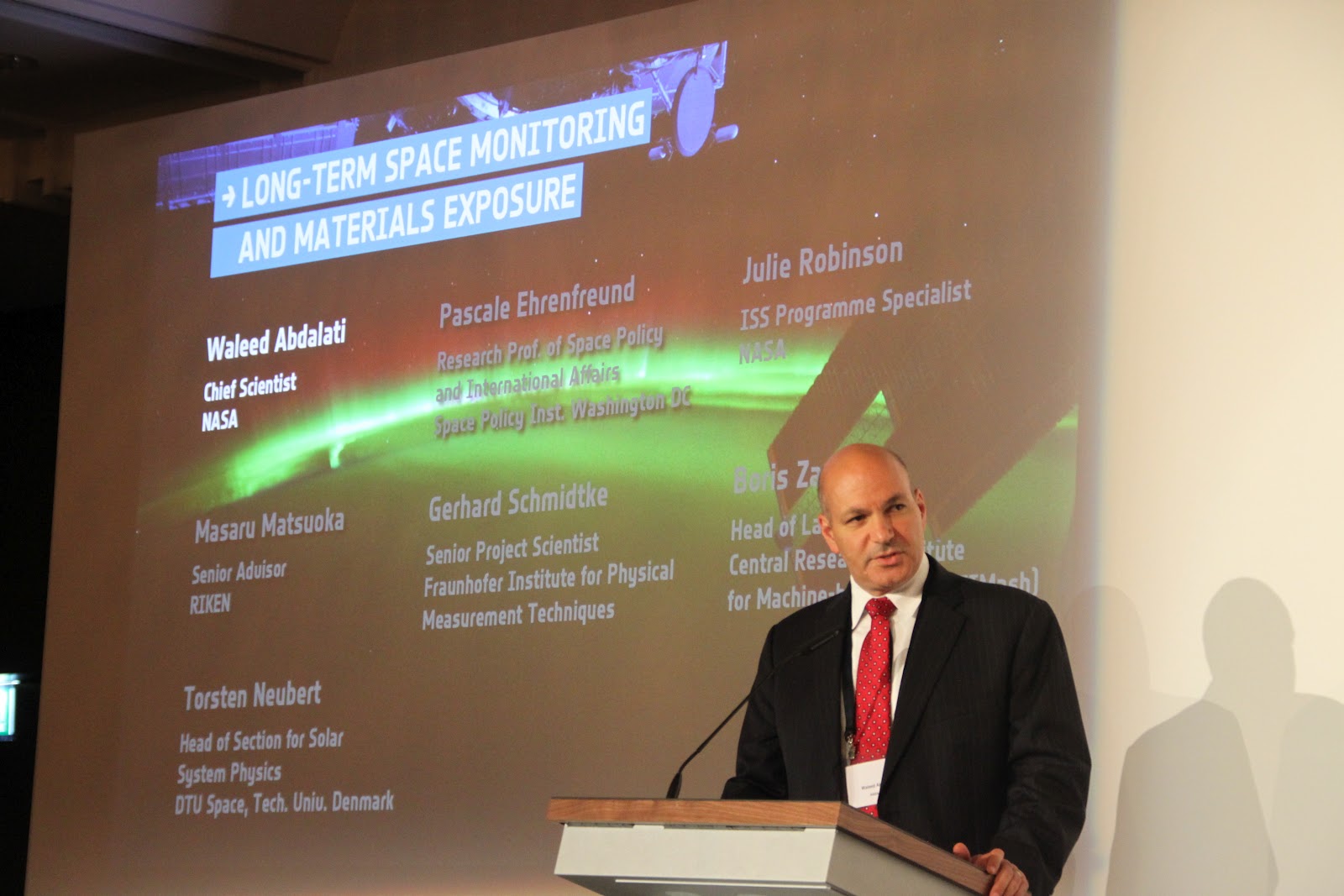
Waleed Abdalati, Pascale Ehrenfreund, Julie Robinson,
Masaru Matsuoka Gerhard Schmidtke, Boris Zagreev, Torsten Neubert

Waleed Abdalati, NASA’s Chief Scientist, introduced the
round table discussion by saying the international space station (ISS) is a great
platform and opportunity, which we need to take advantage of in order to
understand Earth, the universe, and our place in the universe. The science we
can do from space spans earth science, heliophysics and astrophysics.

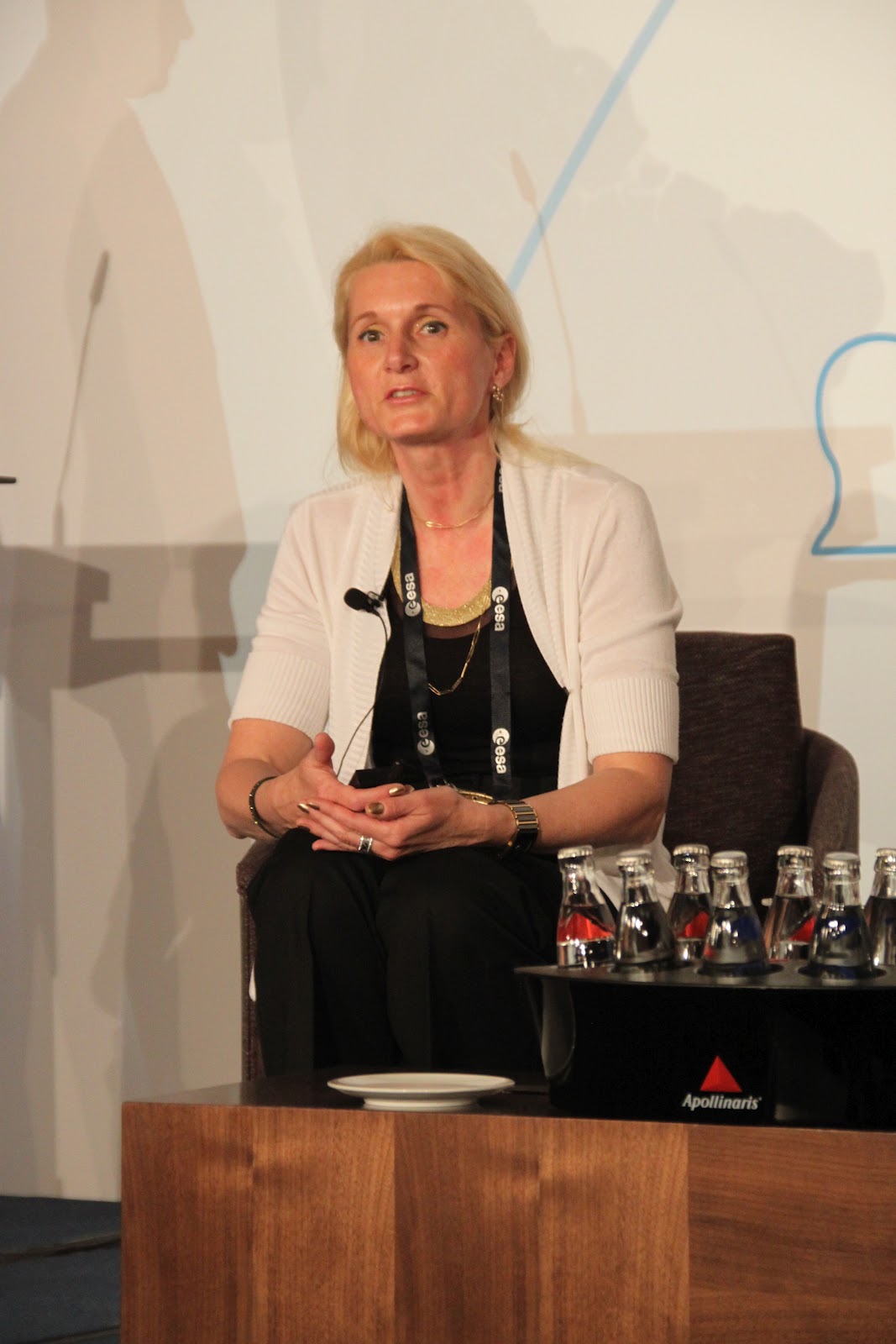
The first speaker was Pascale Ehrenfreund, Research
Professor of Space Policy and International Affairs, Space Policy Institute,
Washington, DC, and Professor of Astrobiology, Leiden University, The
Netherlands. Astrobiological experiments have been performed successfully in
earth orbit for more than two decades, looking at:
  • environmental limits of
    life
  • space biology
  • planetary protection
  • carbon chemistry in space
    environments
  • extra-terrestrial delivery
    processes
  • prebiotic chemistry on the
    early Earth,
These have provided interesting new insights into the
effects of the harsh space environment on biological and organic materials.

Pascale Ehrenfreund
Photo credit: Remco Timmermans

 Future astrobiology research on the ISS includes:

  • BIOMEX – BIOlogy and Mars
    Experiment
  • BOSS – Biofilm Organisms
    Surfing Spac
  • MILLER-UREY – Prebiotic
    chemistry in the early solar system
  • OREOCUBE – ORganics
    Exposure in Orbit – Real time space monitoring
  • PSS – Photochemistry on
    the Space Station
Julie Robinson,
ISS Programme Scientist NASA told us about MISSE, Materials ISS Experiment, a series of materials experiments consisting of
trays that are exposed to space on the exterior of the ISS. Six missions with
thousands of samples have been flown since 2001.
MISSE-X will help update operations in the post-shuttle era, by deploying the trays
robotically rather than via spacewalks, and minimising the amount of mass to
return to earth, as well as providing outreach opportunities for student
collaboration.

The Japanese MAXI (Monitor of All-sky X-ray Image) experiment, attached to the ISS, was reviewed
by Masaru Matsuoka, Senior Advisor, RIKEN. It has:

  • produced an all-sky map
  • monitored all sky x-ray
    objects continuously since Aug 2009
  • discovered 22 new sources
  • allowed over 100 rapid
    alerts to be issued to worldwide astronomers of transient events.
Highlights include detecting jets from a giant black hole
and super bursts from a binary star.

Gerhard Schmidtke,
Senior Project Scientist, Fraunhofer Institute for Physical Measurement
Techniques, Germany, talked about the ISS SOLAR mission, installed on an
external platform of the ISS, which contains 3 instruments for solar
observation. So far 4 years of data has been produced. Data for a full solar
cycle of 11 years would be extremely useful, as it can provide the opportunity
to calibrate all other measurements, as satellite measurements show divergence.
ISS offers a unique chance to bring up, test and retrieve components, to see
what could be causing different efficiency of different instruments. There is a
need to obtain more accurate data; ISS provides this opportunity.

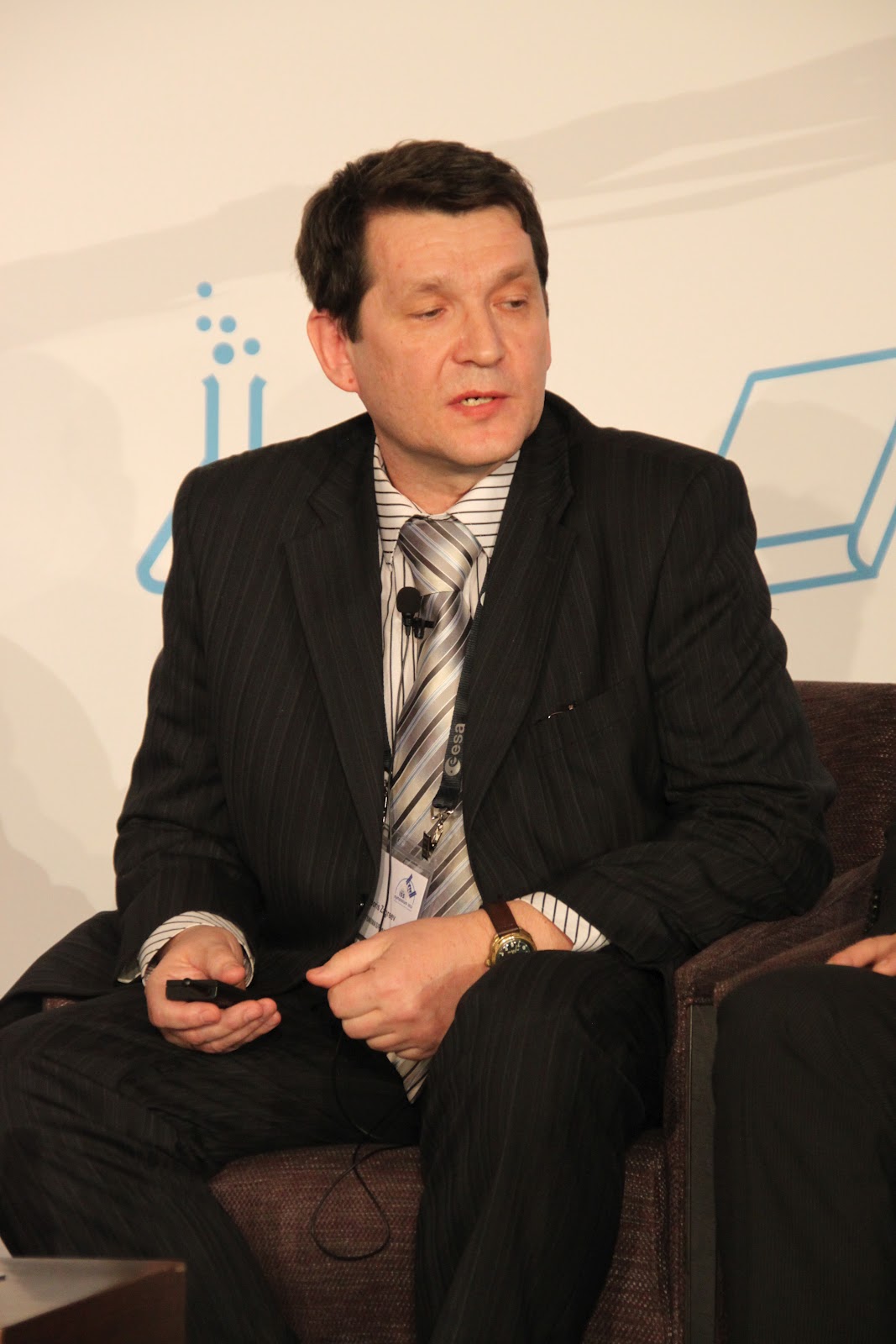
Boris Zagreev
Photo credit: Remco Timmermans

Boris Zagreev,
Head of Laboratory, Central Research Institute for Machine Building, TsNIIMash,
Russia spoke about the Russian research program, and the contribution made by
the ISS to biomedicine, geophysics, astrophysics, environmental monitoring,
biotechnology and long term exposure of different materials and their
resilience to extra-terrestrial conditions.

214 experiments on the ISS have already produced over 600
scientific articles and reports. Future Russian utilization plans include
further scientific research, such as studying ultra-high energy particles and
continued Earth monitoring, together with development of new technologies for
biomedicine, and technologies for future manned orbital and interplanetary
missions.
The final speaker, Torsten
Neubert
, Head of Section for Solar System Physics, National
Space Institute, Technical University of Denmark, introduced ASIM,
Atmosphere-Space Interactions Monitor on the ISS. It is due for launch in 2015,
and will study thunderstorms by looking at lightning above the clouds and very
high up in the upper atmosphere. It is hoped this will provide new
insights into the physics of atmospheric processes powered by thunderstorms,
looking at electrical discharge in the atmosphere, radiation, water vapour
movement through the atmosphere, and the effect on climate and climate
variability.

Questions were then taken from the audience:
Do you have
difficulty getting funds for ISS from multi fields?
Abdalati: “There is
recognition that the ISS has a lot of value and potential to offer as we extend
its life. There is healthy tension between the science drive and the technology
platform push; we have this capability, let’s make the best use of it. There
are many instances where these marry up and it’s a win-win situation.”
Waleed Abdalati
Photo credit: Remco Timmermans
What have you found
to be the biggest challenges in getting capability in space to the ISS (aside
from funding)?
Neubert: “The reaction is
often “great idea, but someone else should pay for it”. You go to the
racecourse and sometimes you win! I don’t know, I haven’t found a formula for
it.”
Abdalati: “The biggest
challenges are timelines and timescales. My student was doing a PhD, when the
experiment launched he was an assistant tenured professor. When samples came
back he was CEO of his own company. That’s a real challenge.”
Robinson: “ISS was
designed a long time ago so one challenge is things being upgradable. Because
it is a human platform we can upgrade it for this generation of instruments today,
and again in the future. Great flexibility is an extra asset.”
Abdalati ended
the session by saying:
“It starts with
believing in what you do and then convincing others to believe in what you do.
Shared belief can help it grow from there, and makes the potential much
greater. The great thing about this ISS symposium is being surrounded by people
who believe in it.”
  
Further reading: “ISS: Benefits for Humanity” 


ISS Symposium: “The ISS has changed the world forever”

“In building the ISS partnership we have made an impossible
step, we have changed the world forever.  The ISS is a model for the future of humanity.
We have to manage the ISS as one part of a wider exploration program for the
benefit of humanity”

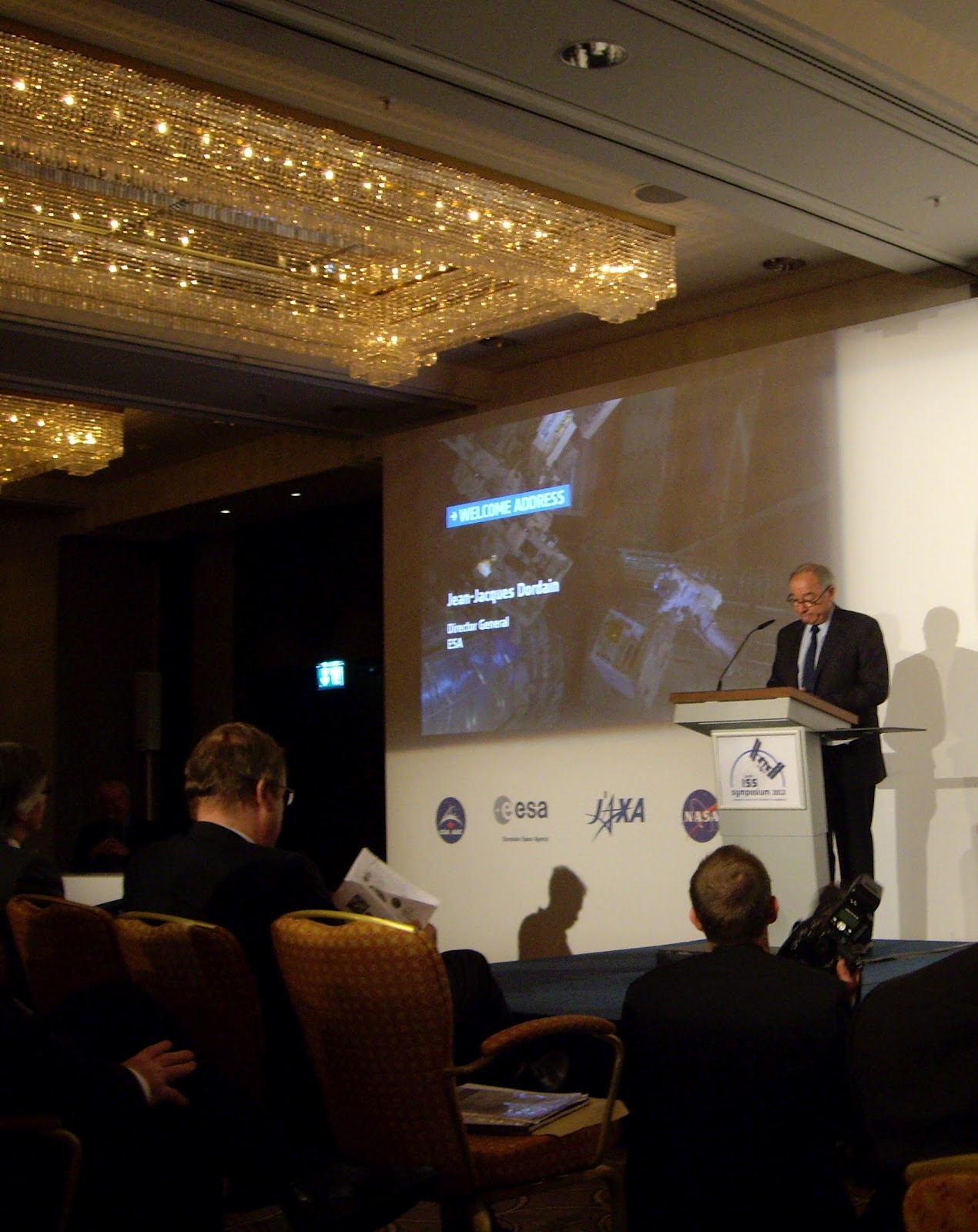
Jean-Jacques Dordain
With these remarks, Jean-Jacques Dordain ESA Director
General, opened the International Space Station (ISS) Symposium: “Research in
Space for the Benefit of Humankind in Berlin” on Wed 2, May. Over 250 delegates
were invited to attend, representing the ISS partner nations.
Johann-Dietrich
Wörner, CEO of DLR, stressed that curiousity brings knowledge for tomorrow; if Einstein
hadn’t invented relativity, satellite positioning would be impossible.
Germany’s vice chancellor, Philipp Rösler, enthused about medical technologies,
such as the plasma ray which can disinfect small objects without touching them,
the research for which was carried out on the ISS.
The
agency leaders had a discussion session, where JAXA’s vice president Kiyoshi
Higuchi mentioned how the ISS will contribute to solving the issues we face on
Earth, while ISS Director Mark Uhran stated “we all have a mission: interplanetary
human space flight. The ISS will enable us to step forward in the future”. He added
that economic growth has its basis in research and development, which is what
the ISS is all about. Gilles Leclerc, CSA, said it requires courage and vision
to support long term projects, and others agreed it remains important to reduce
operational costs and increase efficiency. Further new partners would be
welcome.

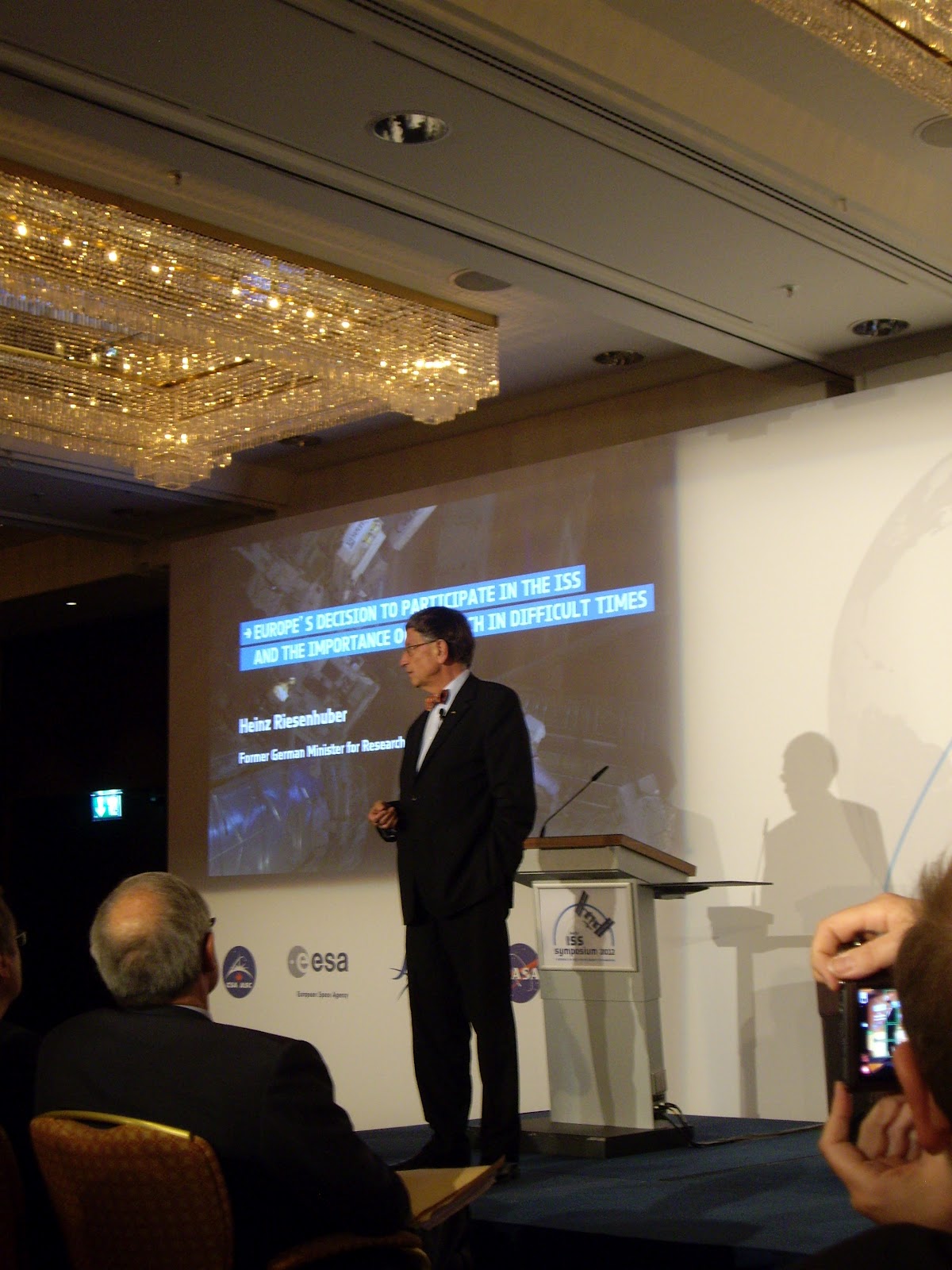
Heinz Riesenhuber
A passionate speech was delivered by Heinz Riesenhuber,
former German Minister, about needing to capture the hearts and minds of the
public before spending their money: “If everyone knows that imagination is
behind every program, it makes it stronger.
63 countries have participated in research and education on
the ISS, showing that science and knowledge have no borders, while astronauts
motivate students in core ways that can transform their lives, according to
Julie Robinson, NASA.

Sergey Krikalev

Sergey Krikalev, head of the Gagarin Cosmonaut Training Centre, ended the first day talking
about the balance of creativeness and determinism when living in space. He and
Robert Cabana were the first people to enter the ISS in December 1998.

ISS Symposium: Berlin

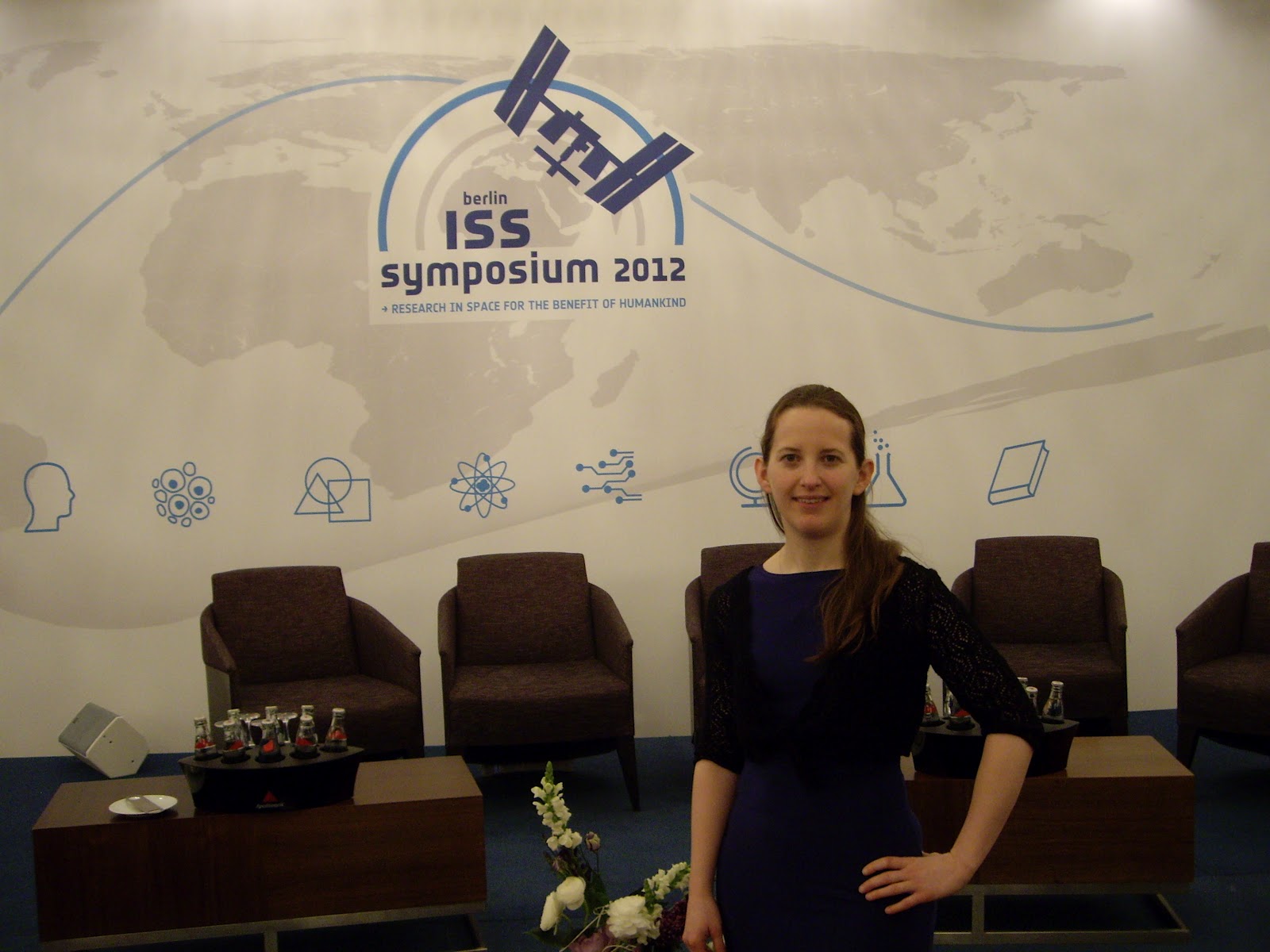
I successfully applied for an invitation to the International Space Station Symposium which took place in Berlin, 2-4 May, 2012, and enjoyed an amazing two days learning about the science being conducted on the ISS.

Top respresentatives from all five ISS partners were in attendance, including Charles Bolden and John-Jacques Dordain. Over 250 delegates attended, a diverse range of stakeholders including astronauts, scientists, engineers and politicians.

Paolo Nespoli (ESA astronaut) very kindly spent a couple of hours talking with a small group of us after the gala dinner.
Photo credit: Brigitte Bailleul
Brigitte Bailleul, Paolo Nespoli, myself

“In Orbit” lecture by ESA Astronaut Paolo Nespoli

“When you leave the ISS, you close all the hatches, check your
suit and don’t touch anything anymore. You make sure the seals are effectively
sealed, else you’re stuck, you might not have enough oxygen.”

ESA Astronaut Paolo Nespoli (Italian), addressed the question of the amazing
photographs he took when last leaving the ISS, given the unique opportunity to
provide images of ISS with space shuttle Endeavour and ATV-2 both docked. The
talk was part of the Mission
X
initiative and took place at the Royal
Aeronautical Society
in London on Saturday 28th April. Due to
transport issues he started with an impromptu questions and answers session.

“We only had 15 minutes, we needed to get going, we didn’t have
all the time you might want.”

He described how they left the station in the Soyuz TMA-20 and
THEN broke all these seals in order to take the pictures, which was technically
complicated, and a little bit risky. Some said it was crazy to depart from the
station with shuttle attached, as Soyuz was parked in the closest port to the
shuttle, as it could have impacted the shuttle, or the tail of the shuttle, or
had some problem there. There was also a possibility they would not have enough
oxygen to do all checks/seals again if something went wrong.

The next question asked if he got to choose experiments, and asked
him to talk about one or two experiments he thought were ground-breaking:
“No, astronauts do not get to pick experiments flying on station,
it’s a very complex process. It takes several months if not years.”

He
proceeded to explain that there are a lot of processes to go through, and
various boards eg ethical board for life science, safety boards etc.  You are asked to be a test subject, and like
anywhere on earth, you have the right to refuse to do them, but he felt
fortunate to be there and that it was his duty to do all experiments asked.


“Its very difficult for us to have a vision on
the data itself. Our task is to be there and collect as good data as we can.”

He sees his job as a technician, an operator, and likened it to
being a plumber or electrician.  The
principal investigators and scientists then take that data for analysis.  A lot of the data have statistical value in
increasing the sample size for better confidence in results.

He mentioned an experiment to do with looking at the poles, as we
know that the magnetic fields shift back and forth over thousands of years,
perhaps due to magma exploding, but we still don’t have a clear understanding.
At this point, Yamil Garcia, one of the Mission X co-ordinators, formally
introduced Paolo, who phoned Mission X last year from the ISS!  Paolo was reunited with his laptop and
presentation slides for his talk to begin. I have left as much of this as possible in his own words, paraphrasing and editing in places for clarity.

Why do we send astronauts to space?
The unique environmental conditions found in space (microgravity
and position with respect to earth) allow us to:
–        Conduct scientific research (which cannot be done on earth)
–        Develop and test new technologies and processes
–        Explore
If we had microgravity on earth then we wouldn’t need to go into
space, but the only place you can experience microgravity is space. Also,
because we go there, which is very difficult, we end up developing new
technologies which eventually end up in everyday life like washing machines,
cars and every day things.
My three year old daughter, when told not to touch, wants to touch
everything. We want to explore. The cultures that have wanted to explore have
been most successful. Exploration is something we NEED to do.

The Space station is fairly long, about 100 yds long, bigger than
a football field, it orbits at an altitude of 400km above the Earth. The internal
volume is almost as big as 2 jumbo jets. Outside there is a long truss for the
solar panels to take energy from the sun. It flies about 17,500 mph, 4 miles
per second, so you’re flying pretty fast. At that speed, you go round the earth
every 90 minutes. Every 45 minutes you have a sunset or sunrise. 16 sunsets and
sunrises a day, so you probably don’t want to use this to decide when to eat,
sleep etc! So we use GMT.
The space station partners are USA, Russia, Europe, Japan and Canada.
It is the biggest international project that has been done so far. When nations
really want, they can work together. It’s not easy to take these all together
and sit them at a table to agree everything, it takes a lot of discussions and
compromises. If we want to go to Mars, each one of these nations alone does not
have the capabilities and political will to go on their own.

 Paolo Nespoli, Dmitri Kondratyev, Catherine ‘Cady’ Coleman, ISS, Dec 2010

Usually 6 astronauts are a full crew for the space station, they go
up as 3 and 3 as Soyuz spacecraft have 3 seats. So when you arrive you have a
senior crew to show you the ropes, and three months later when they leave, you
become the senior crew with a new junior crew. We were a good team there.

We launched from Baikonaur, the same launch pad as Gagarin
launched from 50 years ago. The Soyuz vehicle is almost the same, more or less.
You do the same things that they did at that time. The Russians launched at 1am
in Dec in bad weather, but they can launch in any conditions, unlike shuttle. Soyuz
starts more slow, shuttle is much more powerful. 800 miles in 8.5 minutes. This was the ESA mission patch for our mission, magISStra.

There is a daily schedule of things to do on station, as this
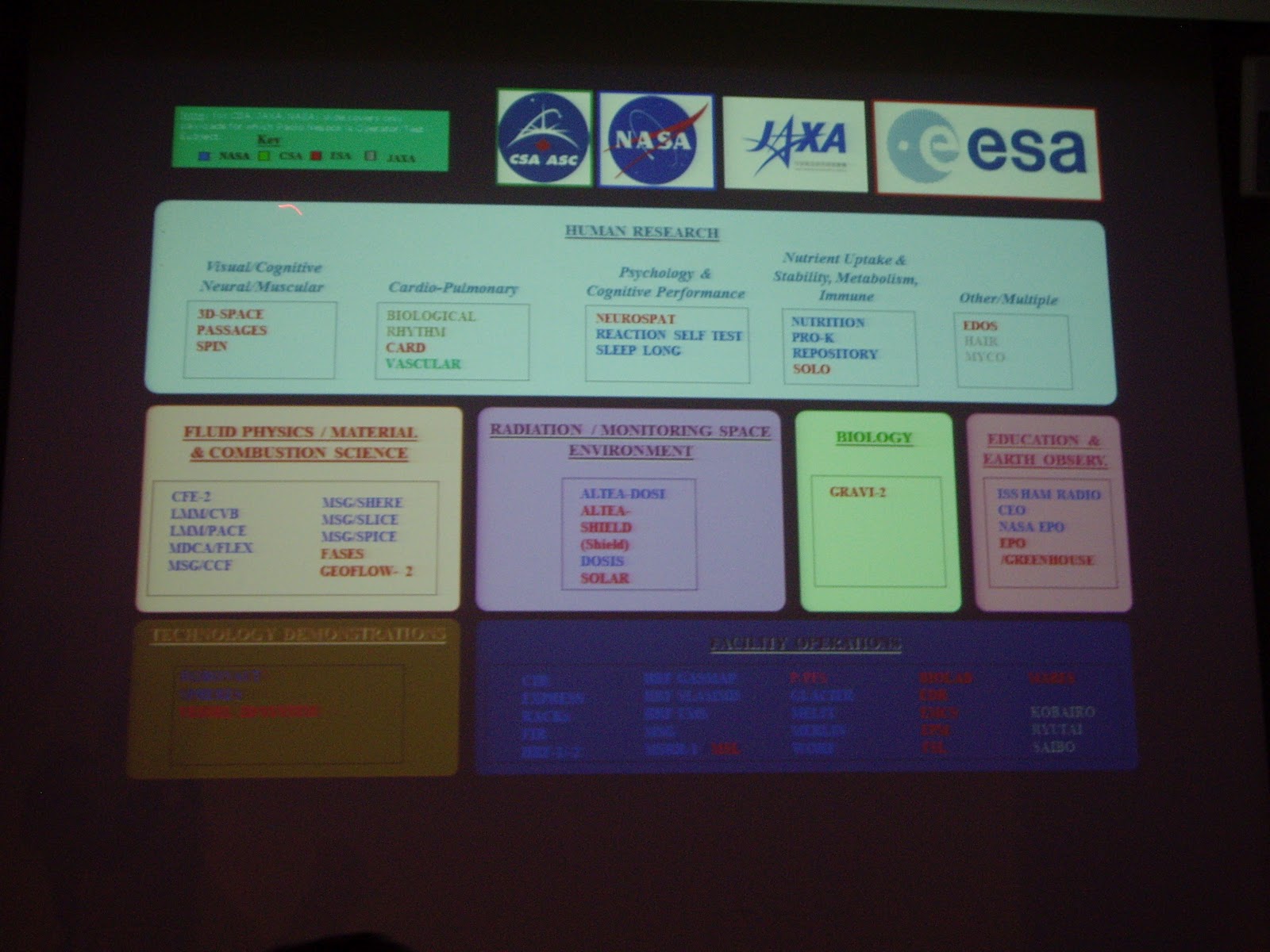
slide below shows. We looked at 1-2mm worms, and how they behave in microgravity. We
look at cell cultures, human cells, cancer cells, animal cells etc, under
different conditions and see what happens.
 (click the photo for larger size)

On station you are losing things constantly, all the time. Fluids
shift from the lower part of the body to the upper part, so you feel really
heavy up top, it effects the eyes etc.
Catherine Coleman, the American astronaut on our crew, she was
doing circadian rhythm analysis. The brain has a complex re-adapting
mechanism; we’re trying to figure out a way to help it. The microgravity
environment is so drastically different to everyday life that your brain has to
change again. It makes you similar to someone who had an accident and needs to
re-adapt again on the ground. If we understand these mechanisms then we can apply
them to everyday life.
The way things burn is very different. We study how fire moves in
microgravity, which can then help us build better carpets that don’t burn etc.
Scott Kelly was working a technological experiment with a red
fluid. You pull a switch to transfer the liquid to a new container. The liquid
goes all around the walls with an empty space in the middle, because the liquid
is attracted to the walls of a cuboid container, in microgravity.
This is me (below), playing with a 3D video camera, built in ESTEC
in Holland, so we have a 3d video taken around the station. This is a radiation
sensor, 6 sensors mounted in this 3d way.

Most of us need glasses on the ISS, it becomes difficult to see
because of the pressure of fluid in eyes. You regain your sight usually on
return to Earth, though there are 3 cases of astronauts who lost part of their
vision and did not gain it back.

Mission X – “Train
like an astronaut”


More and more we age, kids stay in the house, play with computer,
facebook, twitter, email, they don’t go out any more, they don’t play,
challenge themselves. Playing is a good way to establish relationships and to
understand things, otherwise you are confined to writing emails which can give
you a skewed view of society. Another part of Mission X focusses on nutrition, we
need to provide fuel to our body that is good for it.

We take part in education activities on the ISS, via amateur
radio, we can contact schools. We contacted 77 schools, 10,000 kids during our
six month mission, a good way to involve students. Have your school contact the
space station, make a request and it can happen.

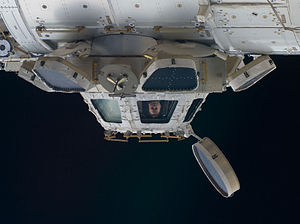
With windows on the space station, there is 3 seconds to take
photos then gone because of the speed we are moving. The cupola is much better
as it gives us 360 degree vision. 

It’s also used for robotic operations, to see
the robotic arm made by Canada for the ISS. Canadarm can be put in lots of
different places and moved around, it can “walk” as well as it has “hands”. It’s
very technologically advanced.

Paolo then proceeded to talk us through various pictures he had taken from the ISS, and got the audience to guess the locations, some of which I have found below. All the pictures have approximately 80km lengths. Unfortunately he ran out of time and he had at least 30-40 slides left that he did not get through. Next time!

 Hervey Bay, Queensland, Australia

 Rio Paraná, Argentina

 United Kingdom

 
 Grand
Canyon, Arizona, USA

Pyramids of Giza, Egypt

 English Channel

 Mount Vesuvius, Italy
 Naples
& Mount Vesuvius, Italy
Further photos can be found on his photo stream.
Mission X presented Paolo with a flag representing the countries involved with the project.

We also spent some time in the pub afterwards with two great guys
who work for NASA at the Johnson Space Centre, Texas.  One, now the Program Manager for Mission X, was previously a
pharmacologist who had flown the ‘vomit comet’ zero-gravity plane many times
while conducting research, and the other was an exercise scientist and
physiotherapist, responsible for training astronauts and also involved in Mission X’s outreach work.

Conference celebrating 50 years of the UK in space

There was a great program of events for this two day conference at the Science Museum.

My contribution to their official blog can be found here.

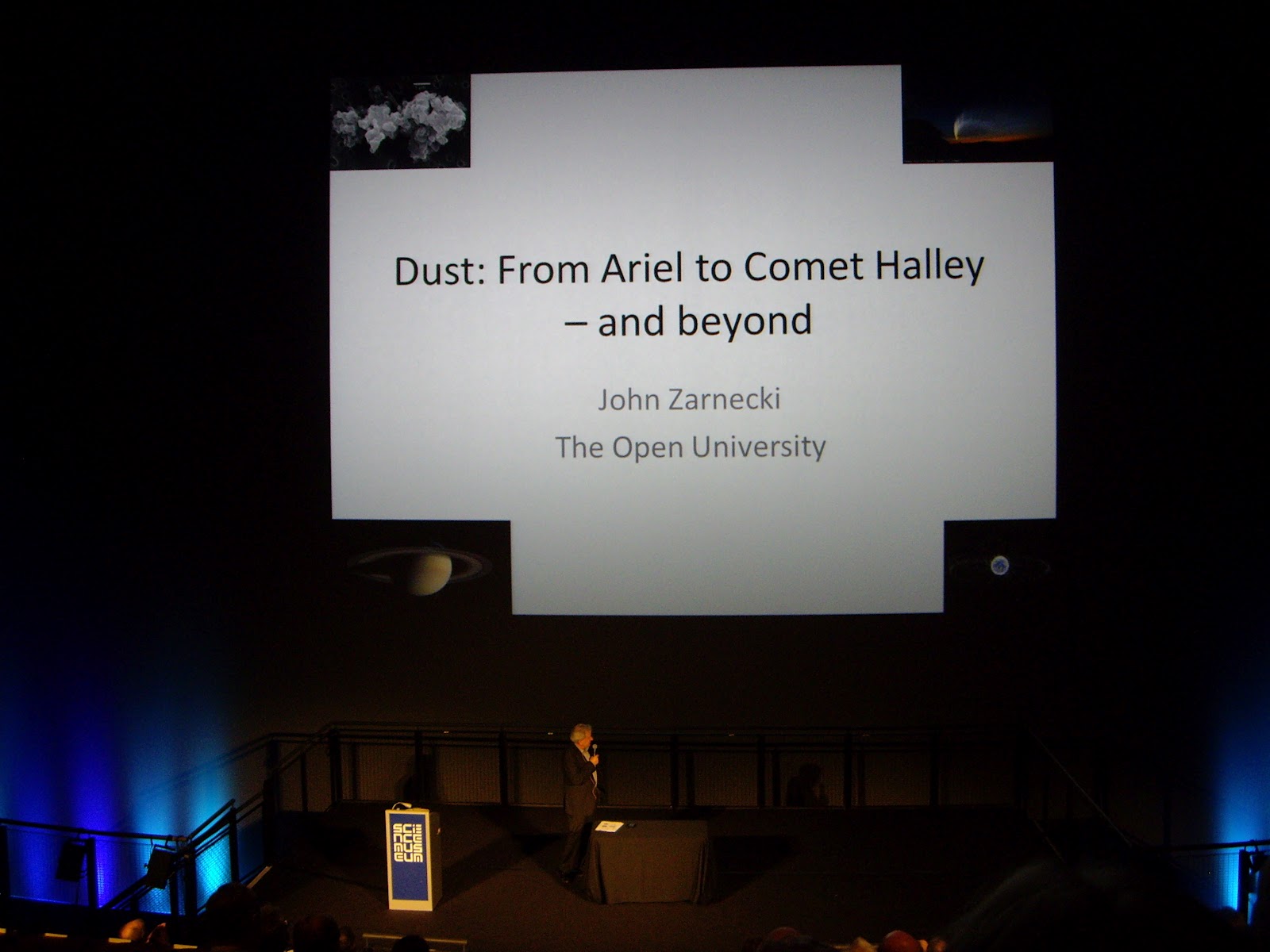
I was excited to meet and talk with John Zarnecki, who spent over 15 years of his life working on the science surface package for the Huygens probe, which successfully landed on Titan on 14th January 2005, and continued to send back data for over 90 minutes. I look forward to seeing him again this summer as he is a tutor at the Alpbach summer school.

Alpbach Summer School

“Dear Ms MacArthur
We are pleased to inform you that your application has been accepted and that we can offer you a place in the Summer School Alpbach 2012. You will be granted a scholarship by the UK Space Agency.”

Best email I have received this year! Very excited and mildly terrified at the prospect of designing a mission to the outer planets, in a diverse international team of 15, in six days plus three days of lectures.  Having spoken with some Alpbach tutors since, the common advice seems to be “Make sure you come well rested and don’t expect to sleep, it will involve 20 hour working days”.

UKSEDS Annual Conference

 “Everything
starts as someone’s daydream” (Larry Niven)

The UKSEDS (UK Students for Exploration and Development of Space) conference took place on Sat 31st March and
Sun 1st April at the University of Kent, bringing together space
students and enthusiasts from universities across the UK, to enjoy two days of
talks, discussions and exhibitions. 

 
Professor Mark Burchell

After a welcome from Nancy Hine, the UKSEDS outgoing
chair, Jeremy Curtis from the UK Space Agency brought us up to date with the
latest statistics.  The UK space sector
employs 24,900 people directly in an industry worth £7.5bn, which is currently
growing at over 9% a year, contrary to the rest of the economy. By 2020 this is
projected to account for £14bn with 115,000 jobs. With 57% of workers currently
having a degree, this is one of the most highly skilled industries which will
continue its growing need for strong science and engineering graduates.


Jeremy Nickless and Simon Feast from ReactionEngines took us through the vision for the Skylon space plane. Skylon was
awarded €1m from ESA through the British National Space Centre in 2009 to prove
core technologies for its innovative SABRE air-breathing rocket engine, which
aims to allow Skylon to take off at a speed of Mach 0.5, and switch to its rocket
engines when it reaches a height of 26km and a speed of Mach 5. It hopes to
take up to 15 tonnes to 300km low earth orbit (LEO), ten times more cheaply and
400 times more safely than previous methods, with a two day turnaround time
between journeys.  Skylon will glide high
on re-entry, with a lighter larger surface area making it less brick-like than
the space shuttle.  However,
infrastructure such as 5.5km reinforced runways will be needed, to absorb the
high tyre pressures of landing.
Keith Muirhead of HE Space Operations, recruitment
for the space industry, advised students that experience is usually expected
before getting a job in the space industry. Internships are a great way to open
doors, and there are many relevant bodies to join for information and approach
for funding, eg WIA, RAeS, SGAC, RAS. Contractors for ESA are usually required
to have at least 3-4 years of experience.

Next, an opportunity to study the aurora in Kiruna,
Sweden, courtesy of Carol Norberg’s Arctic Science course, run by Umeå
University. This six week correspondence course includes four days studying in
Kiruna in February, and is free of tuition charges to all EU students.  She also runs a longer ‘Human Spaceflight and
Exploration’ course in the summer. Both courses offer a great experience to study
with like-minded people from different countries and backgrounds.
Dr David Ashford set out Bristol Space planes’
ambitions to build Ascender, a single-stage reusable sub-orbital space plane,
which would provide the basis for larger scale versions, Spacecab and Spacebus.
Dale Potts of MSSL then provided the story of the hunt for Prospero, the only
UK satellite to be successfully launched by a UK rocket in 1971.
Dr Lewis Dartnell introduced astrobiology, the quest
to understand the origin, evolution, distribution and future of life in the
universe. He showed a short video produced by Harvard of “Life in a cell”
(below), which he brought to life with vivid descriptions
such as “molecular walking machines”, “handshake proteins” and “scaffolding
proteins”. 

He demonstrated the different possibilities for
life, shown by the extremophiles found on earth able to live in extremes of
temperature, acidity and pressure. Taking each solar system body in turn, he
discussed what kind of microbes might be able to survive the conditions found
there. 
Ed Trollope, project manager for the Rosetta Lander
Simulator at DLR, explained what was involved to fly the Rosetta mission. ESA’s
spacecraft plans to go into orbit around Comet 67P in 2014, deposit a small
lander on the nucleus, and stay with the comet for two years as it passes
around the sun.
Reports followed on UKSEDS projects. First up, Arrow
Lee from team PoleCATS told us of their miniaturised plasma analyser
experiment, which has been selected by REXUS (Rocket Experiments for University
Students) to be launched next year on a osunding rocket from Kiruna.  Jim Sadler then provided information on
Bristol SEDS Picosatellite and Rockoon projects. After a successful high
altitude balloon project, they are now working on two long term projects, to
create a UKSEDS suborbital launch capability using a Rockoon, and produce a
Pico-Sat based experimental subsystem within the next few years.
The day finished with live video link up from US SEDS
and SEDS India, who reported on what was happening in their SEDS groups,
opening up good communication links for UKSEDS to keep in touch internationally
in the future.
Sunday started with Professor Mark Burchell from the
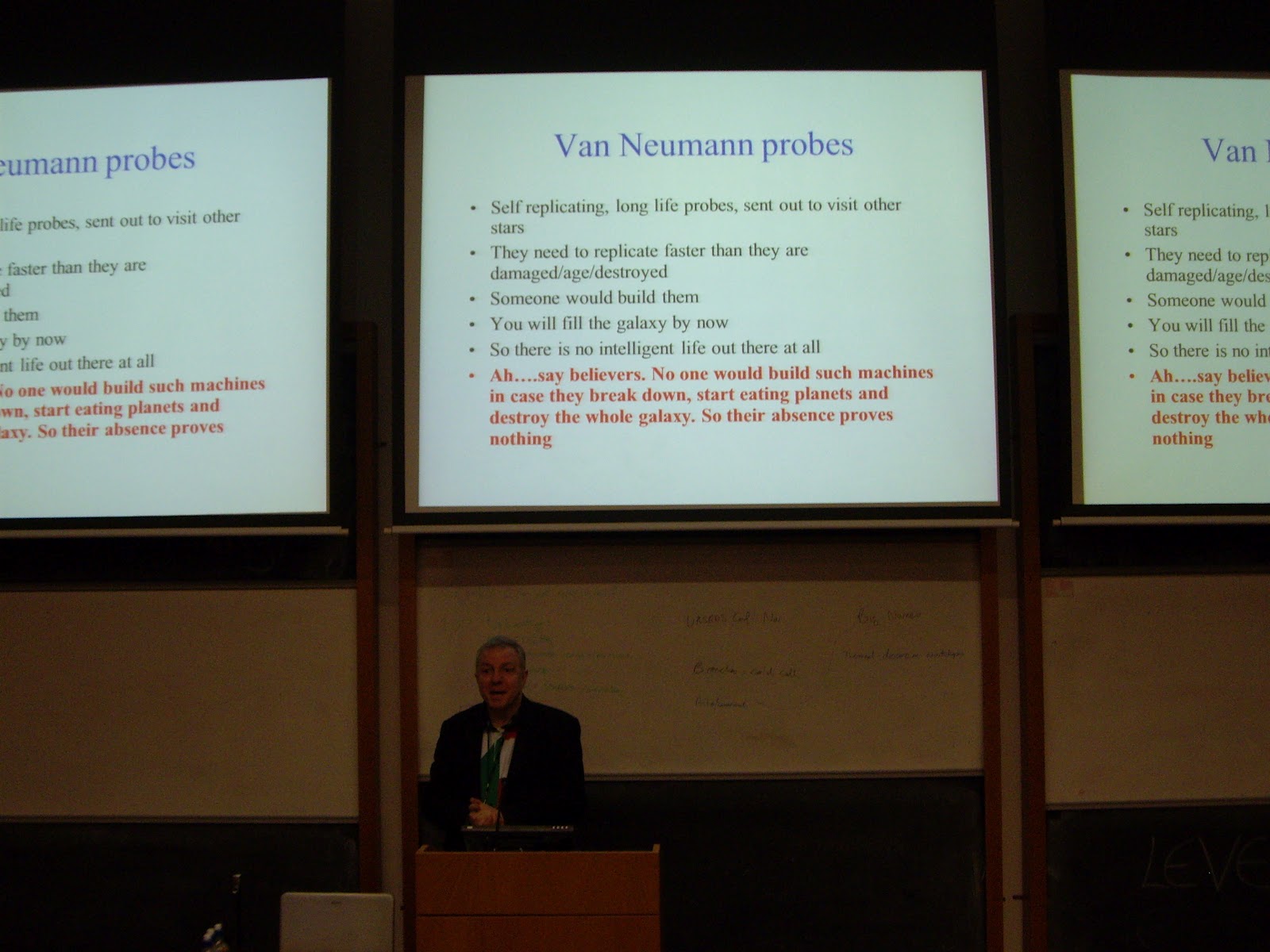
University of Kent, discussing ‘Life in Space’. He suggested we should SETL
(search for extra-terrestrial life) rather than SETI as most life on Earth is
not intelligent. He observed that by “following the water”, NASA has found it
everywhere and postulated that the new motto should be “follow the organics”,
complex organic molecules which are more likely to indicate life, or look for
pollution, waste products produced by life. He introduced and discussed the Fermi
paradox, Drake equation and panspermia.
Radim Badsi updated the audience with the latest in
CubeSat technology, concluding that CubeSats can be used for serious research,
while the standardised platform and open collaborative approach will reduce
cost and increase reliability.
The UKSEDS held their AGM, reviewing the year’s
events which included rockets at MSSL, a stand at the NLO Astronomy fair and a November
workshop, and voted in an enthusiastic new committee to fill some of the empty positions from last year:
Chair:
Damian Rumble
Vice
Chair: Nancy Hine
Secretary:
Ryan Laird
Treasurer:
Jeremy Nickless
Projects:
Richard Painter
Industry:
Douglas Liddle
Outreach:
Maggie Lieu
Dr Stephen Lowry talked about ‘Missions to Small
Bodies’.  Asteroids and comets contain
remnants of material from the formation of the solar system which may help us
to understand it, while also providing an idea of the collision environment 4.5
million years ago.  The Stardust NASA
mission succeeded in bringing back grains of rock samples from Comet Wild2,
finding minerals in one particle that must have been produced at high
temperatures in a region close to the sun, showing that material has been mixed
across the entire solar system. The Hayabusa JAXA mission brought back
particles from an asteroid, despite problems with the spacecraft, and we are
currently awaiting science results from the analysis. For the Rosetta mission,
as in previous missions, supporting observational campaigns will be key to its
success, as reconnaissance observations from the ground and orbiting telescopes
will be crucial for maximum scientific results.
Jerry Stone regaled us with ideas for ‘Colonies in
Space’, working from Gerard K O’Neil’s vision. Mining the moon and asteroids
for materials would cost a lot less than needing to send materials from earth
into orbit, and make it possible to construct mile long ships at the L5
Lagrange point that could sustain communities, run by solar power. Founding space
colonies will help end wars for resources and prevent overloading of earth’s
heat balance.
Richard Newlands told us how Aspirespace formed out
of a UKSEDS project 21 years ago, organising the National Rocketry Championship
for three years. They are now working on rockoons, and are keen to collaborate
with Bristol’s rockoon project, and look to build a spaceplane in the future.
 Dr Hugh Lewis

Finally, Dr Hugh Lewis closed the day, detailing the
challenges and opportunities presented by space debris. Having launched around
40,000 objects into orbit, half remain there, totalling 6,300 tonnes.
Collisions, explosions and anti satellite tests account for the majority of
fragmentations, which cause the number of these objects to increase, and the
rate of collisions is likely to increase as the number of objects
increases.  The UN has issued debris
mitigation guidelines, to encourage planning for de-orbit at the end of
missions, but in order to deal effectively with the problem of space junk, we
need consensus on active removal, co-operation and collaboration between
countries willing to share the cost of engaging in active removal.  Space debris is number eight on the UN list
of “Ten stories the world should hear more about”.

Special thanks to Nancy Hine, Damian Rumble, Toivo
Hartikainen, Nadeem Gabbani and David Poole for organising an excellent conference.  If you would like to get involved with
UKSEDS, please contact the committee on committee@ukseds.org
or visit the website at http://ukseds.org.