Sir Arthur Clarke Awards, House of Lords

The Sir Arthur Clarke annual awards were made at a lunchtime ceremony arranged by the British Interplanetary Society at the House of Lords, for significant contributions to the space community. Jon Culshaw was a brilliant compere, and the full list of winners can be seen here.

I joined the UKSEDS committee member for a photo with Jon Culshaw.

Jeremy Nickless, Zoe Versey, Jon Culshaw, Richard Painter, me, Ryan Laird
Photo credit: Jerry Stone

EPSC – European Planetary Science Congress

The European Planetary Science Congress took place in Madrid, Spain from 23-28 September 2012. We were invited to present our work carried out at the Alpbach Summer School both as posters and as 15 minute presentations in a special lunchtime session that had been added at short notice.

We were questioned by a Mission Specialist from NASA’s JPL who was very interested in the summer school and kind enough to send positive comments back to the organisers afterwards.

Our Team Orange poster

We went on an excursion to the Centro De Astrobiologia, who gave us a fascinating tour round their modern facilities and gave us a demonstration of their machines to investigate crater formation. It was a great week and a wonderful opportuity to experience Europe’s top Planetary Science conference, just before starting my MSc.

SpaceUp EU – a space un-conference!

The first SpaceUp EU unconference took place at the
Cosmodrome in Genk, Belgium on 22-23 September 2012. The organisers, dedicated
experienced space tweeps Remco Timmermans (Netherlands), Eico Newmann (Germany), Angie
Kanellopoulou (Greece), Marco Frissen (Netherlands), Joachim Baptist (Belgium) and Alex von Eckartsberg
(Germany) did a spectacular job of running a top event. The 100 spots sold out
to people from 15 different countries and sadly last minute enquiries for
tickets had to be turned away.
Our hosts: Marco, Remco, Eico, Alex, Angie, Joachim

We arrived on the Friday evening, and headed to the
advertised “Irish bar”, where over 30 space fans arrived over the course of the
evening. The shared interest ensured a constant buzz in the area, as we greeted
old friends and met many new acquaintances and longstanding friends from
Twitter that were meeting for the first time.

Nick Howes, RIchard Scott, John Richards and Amjad Zaidi enjoying the swag
Day one, we arrived early for registration, to marvel at the
amazing swag bags and start on the coffee. Refreshments were conveniently on
hand throughout the day, with a very efficient lunch organised, and dinner also
served at the Cosmodrome for those who wanted it.
The first session started in style with a special video
message to SpaceUp EU from Bill Nye, “The Science guy” (NASA). The organisers
introduced themselves, thanked the very generous sponsors for all their help
and explained the format for the unconference.
Five bold volunteers for the T-5 slots were up first, to the
complete auditorium. These talks had 20 slides rotating every 15 seconds
through 5 minutes, requiring practice to pace it correctly.
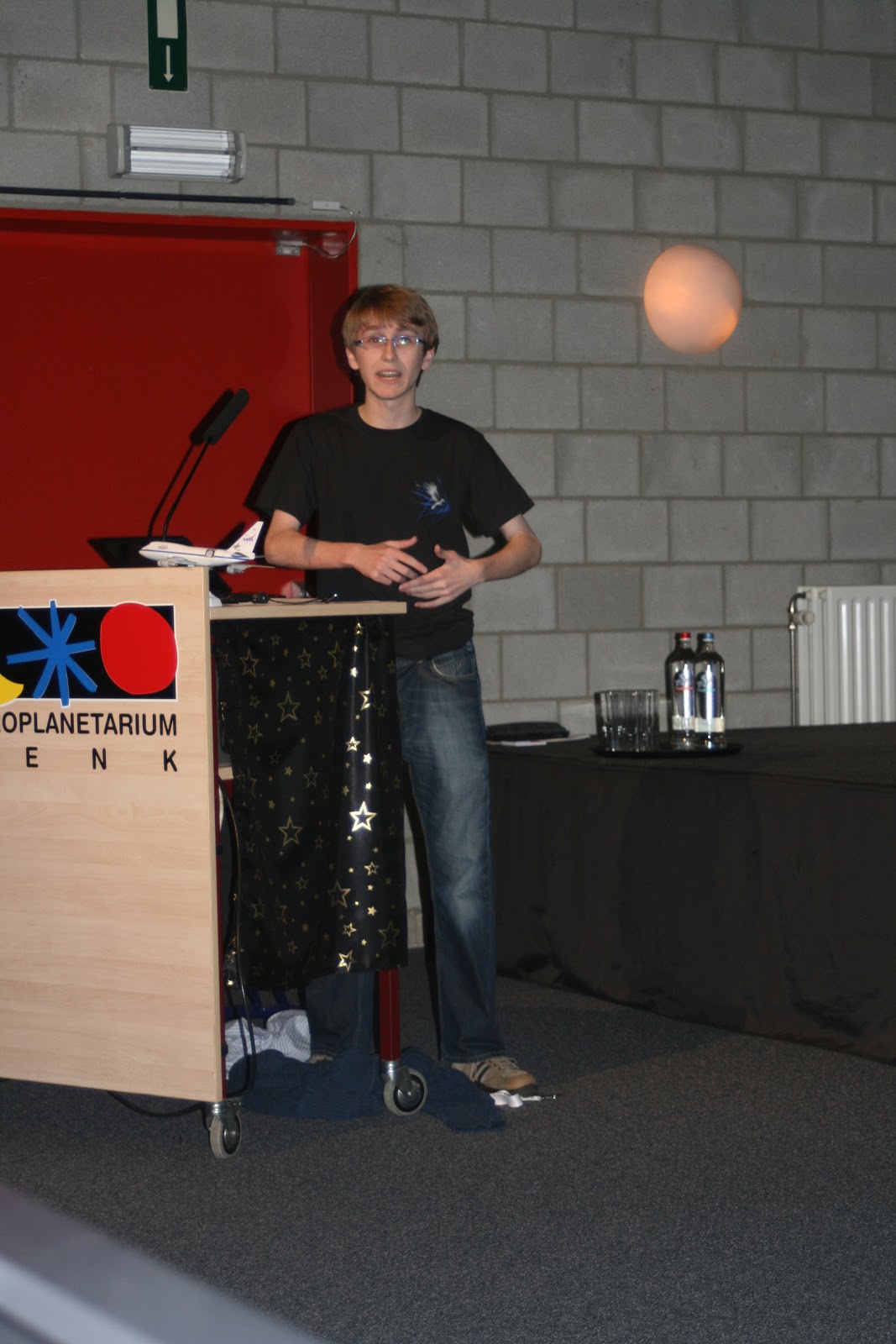
Joseph Dudley, T-5 talk about the UK Space Settlement Competition
Joseph Dudley, from UKSEDS, did a fantastic job of
describing “The best thing that ever happened to me”, which was the UK Space
Settlement Competition in 2010. He described the competition, the pressures,
stresses, and many aspects to think about which resulted in his team travelling
to the Johnson Space Centre, Houston, for the world final.
Three more talks followed, and then it was time to “fill the
grid”. This was a board of 15 and 30 minute slots in 4 different smaller rooms,
for people to post whatever they wanted to talk about, which could take the
form of a presentation, questions, discussion groups, workshops or a mini
project.
Initial enthusiasm meant this board was packed full very
quickly and many people realised with disappointment they would have to wait
until Sunday morning to get a slot on the second day. Others realised they
clashed with things they wanted to see, so a few swaps were negotiated.
Christer Fuglesang, ESA astronaut
After lunch, Christer Fuglesang treated us to a mixture of wonderful space pictures and a small physics lesson, in a presentation made specially for SpaceUp EU.

Olivia Haider from OEWF (Austrian Space Forum) talked about
their Mars2013 simulation, which will be taking place in the desert in Morocco
in February 2013. She described the set up, orgnisation, calls for experiments
and volunteers, and went into more detail on the experiments.  I was delighted to take the opportunity to
describe my experiment and look forward to volunteering in Innsbruck for two
weeks as part of the Remote Science Support team in their Mission Support
Centre. 
Olivia Haider, OEWF Mars simulation in Morocco, Feb 2013
Daniel Scuka from ESA communications took the opportunity to
ask space tweeps for their feedback on social media: what they could do
better, what they like, what else could be done etc.
While grabbing a coffee between talks, I suddenly noticed
Paolo Nespoli, ESA astronaut, in conversation with some space tweeps, having
arrived a day early for his Sunday presentation. This was a great demonstration of his generosity in giving up his whole weekend and in no small part due to the SpaceUp EU organisers who had met and befriended him previously.
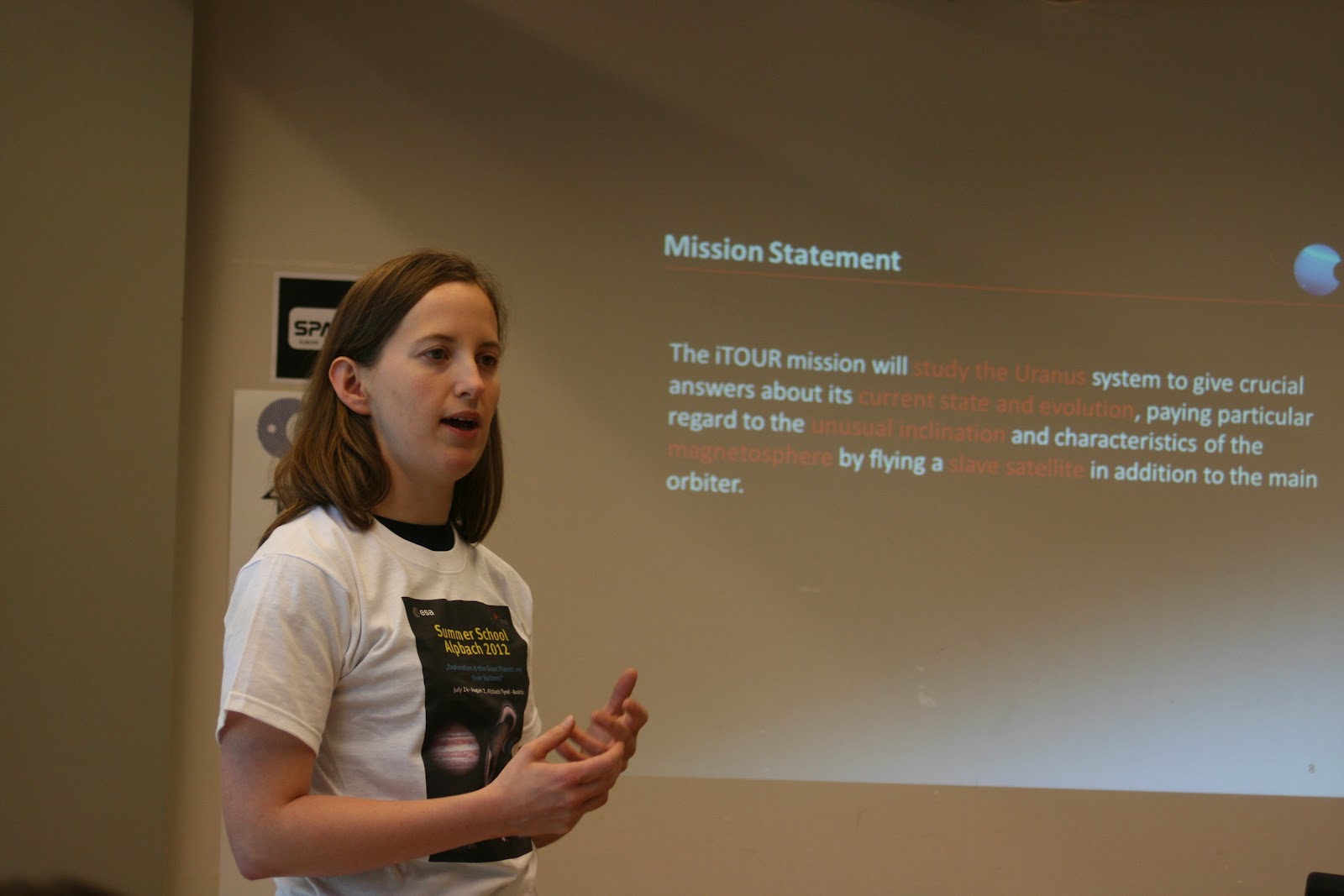
Jane MacArthur presenting the iTOUR mission from Alpbach
Two of my team mates, Ingo (Germany) and Piotr (Poland),
from the Alpbach Summer School presented our team project with me, which went
down well with the audience and resulted in queries from other students as to
how to apply to go next year.
Nick Howes took a slot to promote the amazing
SpaceFest event in Tucson, Arizona and encourage others to save up for it.  Meeting the majority of the Apollo astronauts
is an opportunity not to be missed, especially given three tracks of talks from
top NASA and university mission scientists and excursions to Kitts Peak
Observatory, Mount Lemmon and the University of Arizona Mirror labs.
At 5pm it was time for SpaceUp EU’s Google hangout with
Emily Lakdawalla from the Planetary Science Society, 9am in California for her.
She told us about MSL and then took questions from the audience. Next up was Ron Garan, NASA astronaut, who Skyped in.
We were then invited into the Planetarium to see a movie by
ESA, though by this point in the day exhaustion and information overload led to
a few people dozing off. Dinner at 8pm was served remarkably efficiently and quickly
given the number of people in the room.
Sunday morning started with filling the grid, some more T-5
talks, and then breaking out into sessions again.
Paolo Nespoli, ESA astronaut
We came back together at 12:00 to see Paolo’s presentation,
which conveniently whizzed through the school aspects (which some of us Brits
had already seen in March at the Mission X event at the Royal Aeronautical Society) and described the
amazing features of the many images he took from the ISS, while on orbit for 6
months. He questioned why we are not doing more in space, and
suggested a deeper philosophical reason is needed, rather than “just for fun”, and
thinks giving more money to space agencies is not necessarily the answer.

Nick Howes telling “A tale of two comets”

Sadly we had to leave at 1pm, the afternoon session having
been added after we were initially told it would end around lunchtime when we
booked our Eurostar tickets. However, we followed the tweets online and I lhave enjoyed watching the missed presentations which are available online.

The journey home, as from many other space events this year,
was a sad shift back into real life, from the amazing uplifting atmosphere that
surrounds space enthusiasts when they meet. People are looking towards the next one in Stuttgart at the end of October, also follow @SpaceUpPL on Twitter to keep up to date on the plans for SpaceUp Poland in November!

Popular Astronomy magazine – published!

The September-October edition of Popular Astronomy magazine contains two feature articles I co-wrote with Nick Howes, about our trip to SpaceFest and other space attractions in Arizona such as Meteor Crater and Kitts Peak Observatory. The front cover features Nick’s amazing images of the transit of Venus.
It can be obtained from the SPA here.
Many thanks to Nick Howes and to Peter Grego for publishing these.

Mars Society UK AGM & Conference

The Mars Society UK AGM and conference took place on 25th August 2012, at the National Space Centre in Leicester.  The Mars Society was originally formed in Colorado in 1988, and has had a UK branch since that time. In recent years the society has been restructured, and the new committee look forward to re-establishing the society and extending its membership across the UK.
National Space Centre, Leicester
The AGM re-elected Graham Dale as president, and then noted grateful thanks to Andy Nimmo who was retiring from his many years work as secretary. Paul Clark was elected in his place, and Robert Astbury volunteered to be the new press officer.  Jerry Stone has also joined the committee.


Graham Dale made use of the very recent MSL landing and descent videos in talking through the mission and some of the question it hopes to answer. He noted the first results from the Radiation Assessment Detector have already shown a number of Heavy Ion Events on the surface, mostly below the average levels seen in the cruise stage.

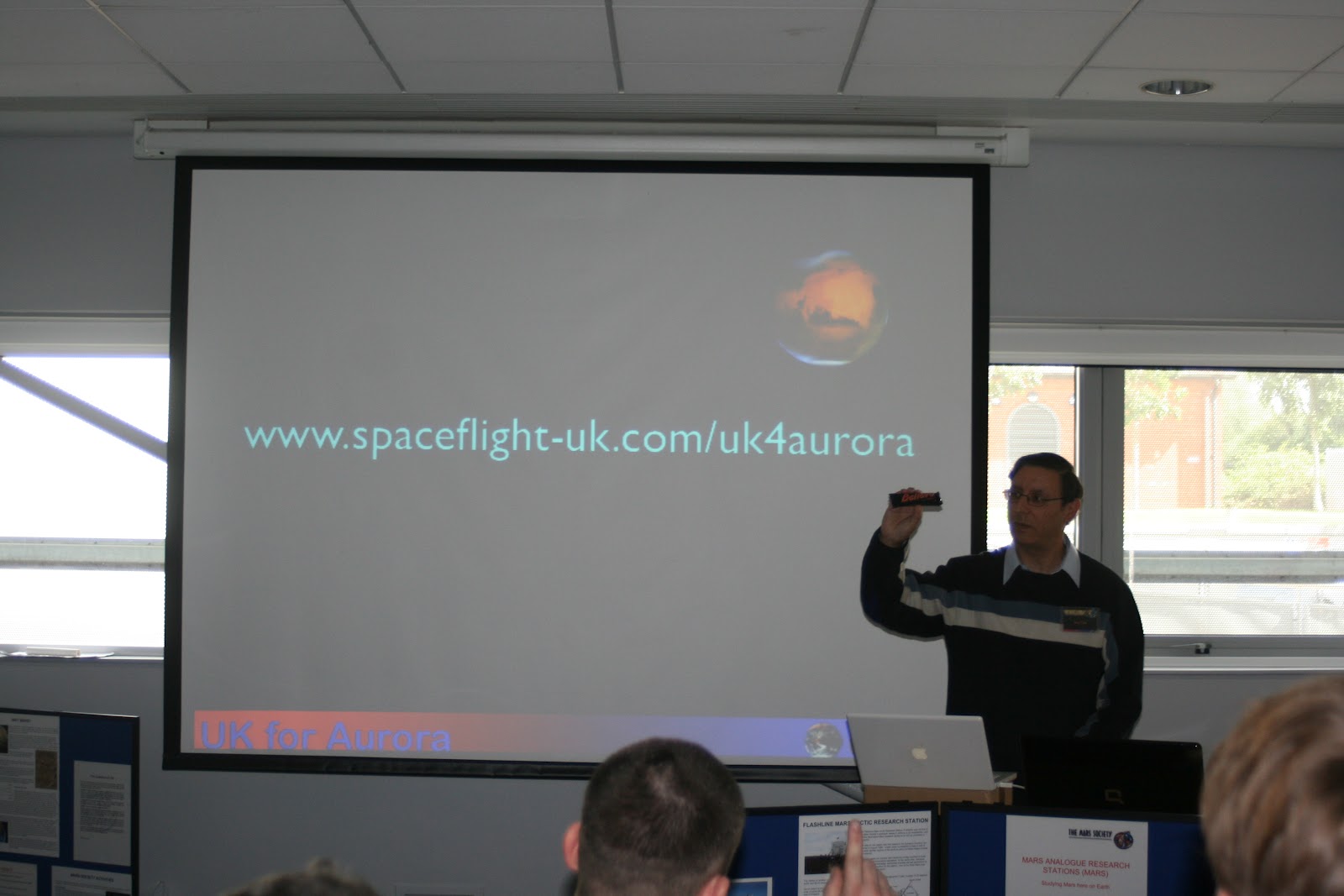
Jerry Stone talked about the ESA Aurora programme to support Mars exploration and described his contributions in publicising this and encouraging people to write to their MPs, to ensure the UK continues to maintain its position within the Aurora programme.
Jerry Stone
A video showing the Mars One plan to establish a settlement on Mars in 2023 was shown, where settlers will plan to live for the rest of their lives. Living units, life support and rovers would be sent in 2020 to prepare for human arrival. 
Ed Buckley presented what we know about Mars, mentioning how the water on Mars is “in prison, not gone”, locked up in ice both on and under the surface. He mentioned how the caves are thought to have more stable temperatures, which would be more conducive for human exploration, and referenced the OEWF (Austrian Space Forum) Mars analog missions, performing experiments in the Dachstein caves in April 2012. Another OEWF Mars analog mission is planned in Morocco for February 2013.
The feasibility of sending cubesat missions to Mars was discussed by Graham Dale, who focussed on ion electrospray microthrusters as a possible solution to the problem of propulsion. The rapid progress of projects such as UKube-1, ExoplanetSat, and KickSat were noted, along with the first iCubeSat 2012 Interplanetary CubeSat Conference which recently took place.
Graham Dale
A video was shown, with extracts from Dr Alex Kumar’s Skype conversation with the Mars Society Convention in Pasadena from 5th August, giving interesting insights into the research taking place at the Concordia station, Antarctica. Experiments into pre and post exercise results, blood sampling, circadian rhythmns, psychological effects, gene interaction and changes are being monitored in this isolated environment, where the darkness of winter lasts 3 months. He maintains a website and blog.
Graham Dale mentioned studies for “Building Martian Nation”, which discussed ideas such as a Martian space elevator and the supply of volatiles from Mars to the Moon, as this would be easier than supplying the Moon from Earth, given the delta v requirements.
Susanne Schwenzer, John Bridges (on screen)
Dr Susanne Schwenzer, from the Open University, gave us further information about the MSL mission, as she works with John Bridges, from University of Leicester, who is currently at NASA’s Jet Propulsion Laboratory. She narrated the high resolution video taken of the descent from MARDI (Mars Descent Imager), and showed the parachute phase images captured by the HiRise camera on board the Mars Reconaissance Orbiter, which only had a 40% change of being captured, so the mission has done a great job at beating the odds so far. 
She described all the instruments, giving extra detail about the first Chemcam laser experiment and touched briefly on the only known problem so far, of one of the wind measuring arms not working. This video shows the planned simulated first movements of Curiosity on Mars.
She presented what the scientific literature knows so far about Gale Crater, listing the many questions that MSL Curiosity hopes to answer, in order to address the main mission goals, of whether Mars could ever have supported life and studying the climate and geology of Mars.
Andy Nimmo talked briefly on current plans for Mars exploration, including the recently announced NASA Discovery mission, InSight, which hopes to see to the centre of Mars and how deeply the crust extends as well as the size of the core. Venezuela has announced that they will go to Mars, and India also announced plans, with a provisional launch in Nov 2013. NASA’s Maven mission is due for launch in 2013, while a Dutch group announced Mars One, involving one way trips to Mars from 2023,with a worldwide lottery.
Alan Bond
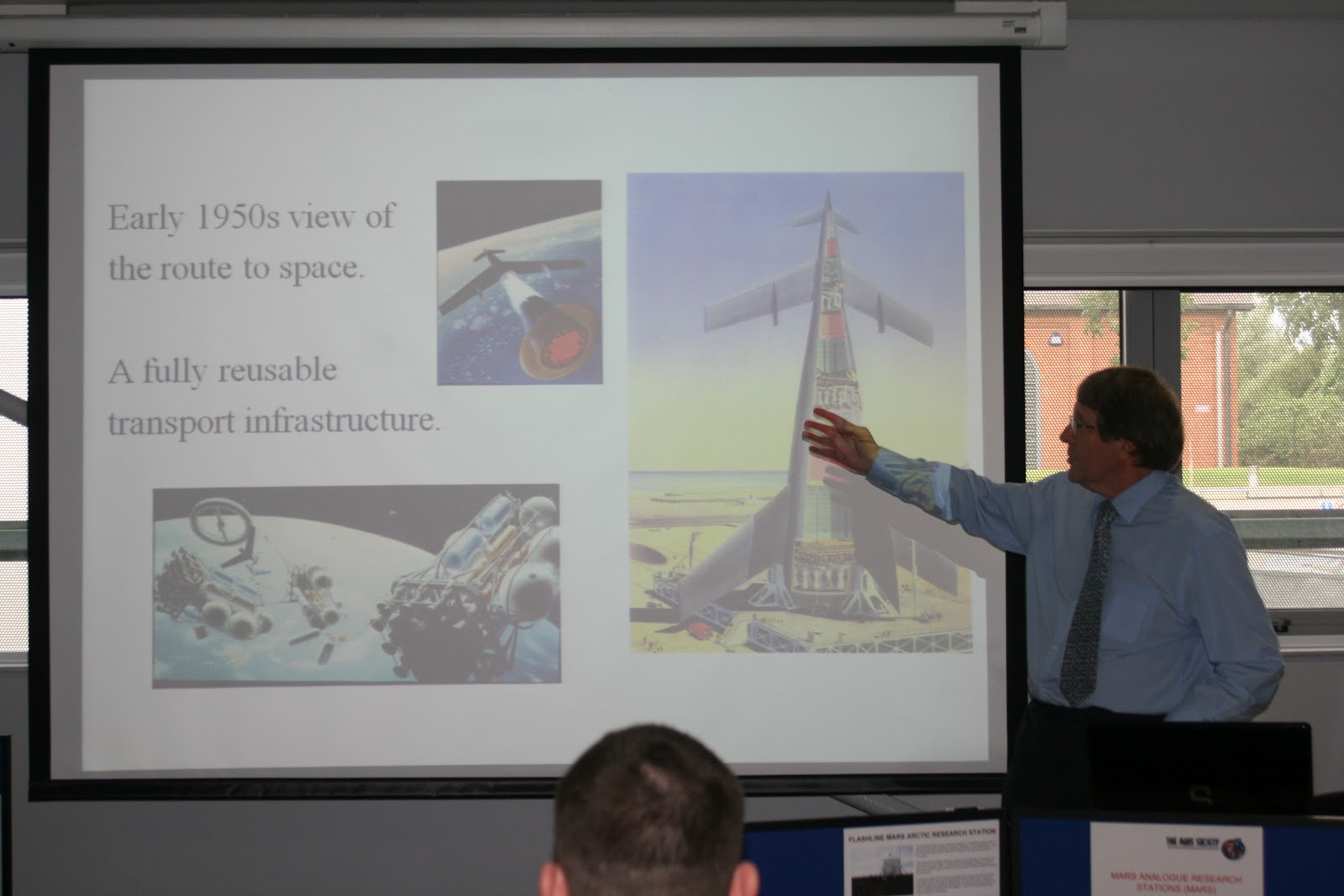
Alan Bond from Reaction Engines finished the day by telling us about Project Troy, a strategy for a mission to Mars which would involve reusable and economically sustainable space transportation. Both an un-crewed precursor phase and principal phase will deploy 3 vessels, with 6 members per crewed vessel and they will establish three bases which will contain a habitat, nuclear power supply & propellant factory, and storage module. The full Project Troy study documentation is on the Reaction Engines website here and there is also an animation video.
Alan Bond, mentioning Skylon
Graham Dale thanked everyone for attending and advised everyone to watch the website and Facebook page for future news and events.
Further information:

A Storify of Tweets from the conference

Latest images and videos from MSL Curiosity.

The Mars Society UK
AGM and conference took place on 25th August 2012, at the National
Space Centre in Leicester.  The Mars
Society was originally formed in Colorado in 1988, and has had a UK branch
since that time. In recent years the society has been restructured, and the new
committee look forward to re-establishing the society and extending its
membership across the UK.

National Space Centre, Leicester
The AGM re-elected Graham Dale as president, and then noted
grateful thanks to Andy Nimmo who was retiring from his many years work as
secretary. Paul Clark was elected in his place, and Robert Astbury volunteered
to be the new press officer.  Jerry Stone
has also joined the committee.

Graham Dale made use of the very recent MSL landing and
descent videos in talking through the mission and some of the question it hopes
to answer. He noted the first results from the Radiation Assessment Detector
have already shown a number of Heavy Ion Events on the surface, mostly below the
average levels seen in the cruise stage.

Jerry Stone talked about the ESA Aurora programme to support
Mars exploration and described his contributions in publicising this and
encouraging people to write to their MPs,
to ensure the UK continues to maintain its position within the Aurora
programme.
Jerry Stone
A video showing the Mars One
plan to establish a settlement on Mars in 2023 was shown, where settlers will
plan to live for the rest of their lives. Living units, life support and rovers
would be sent in 2020 to prepare for human arrival. 
Ed Buckley presented what we know about Mars, mentioning how
the water on Mars is “in prison, not gone”, locked up in ice both on and under
the surface. He mentioned how the caves are thought to have more stable
temperatures, which would be more conducive for human exploration, and
referenced the OEWF (Austrian Space Forum) Mars analog missions, performing experiments
in the Dachstein caves in April 2012. Another OEWF Mars analog mission is planned
in Morocco for February 2013.
The feasibility of sending cubesat missions to Mars was
discussed by Graham Dale, who focussed on ion electrospray microthrusters as a
possible solution to the problem of propulsion. The rapid progress of projects
such as UKube-1,
ExoplanetSat, and
KickSat
were noted, along with the first iCubeSat
2012
Interplanetary CubeSat Conference which recently took place.
Graham Dale
A video was shown, with extracts from Dr Alex Kumar’s Skype conversation with the
Mars Society Convention in Pasadena from 5th August, giving
interesting insights into the research taking place at the Concordia station,
Antarctica. Experiments into pre and post exercise results, blood sampling,
circadian rhythmns, psychological effects, gene interaction and changes are
being monitored in this isolated environment, where the darkness of winter
lasts 3 months. He maintains a website and blog.
Graham Dale mentioned studies for “Building Martian Nation”,
which discussed ideas such as a Martian space elevator and the supply of
volatiles from Mars to the Moon, as this would be easier than supplying the
Moon from Earth, given the delta v requirements.
Susanne Schwenzer, John Bridges (on screen)
Dr Susanne Schwenzer, from the Open University, gave us
further information about the MSL mission, as she works with John Bridges, from
University of Leicester, who is currently at NASA’s Jet Propulsion Laboratory.
She narrated the high resolution video taken of the
descent from MARDI (Mars Descent Imager), and showed the parachute phase images
captured by the HiRise camera on board the Mars Reconaissance Orbiter, which
only had a 40% change of being captured, so the mission has done a great job at
beating the odds so far. 
She described all the instruments, giving extra detail
about the first Chemcam laser experiment and touched briefly on the only known
problem so far, of one of the wind measuring arms not working. This video
shows the planned simulated first movements of Curiosity on Mars.
She presented what the scientific literature knows so far
about Gale Crater, listing the many questions that MSL Curiosity hopes to answer,
in order to address the main mission goals, of whether Mars could ever have
supported life and studying the climate and geology of Mars.
Andy Nimmo talked briefly on current plans for Mars
exploration, including the recently announced NASA Discovery mission, InSight, which hopes to see to the
centre of Mars and how deeply the crust extends as well as the size of the
core. Venezuela has announced that they will go to Mars, and India also
announced plans, with a provisional launch in Nov 2013. NASA’s Maven mission is
due for launch in 2013, while a Dutch group announced Mars One, involving one
way trips to Mars from 2023,with a worldwide lottery.
Alan Bond
Alan Bond from Reaction
Engines
finished the day by telling us about Project Troy, a strategy for a
mission to Mars which would involve reusable and economically sustainable space
transportation. Both an un-crewed precursor phase and principal phase will
deploy 3 vessels, with 6 members per crewed vessel and they will establish
three bases which will contain a habitat, nuclear power supply & propellant
factory, and storage module. The full Project Troy study documentation is on the Reaction Engines website here
and there is also an animation video.
Alan Bond, mentioning Skylon
Graham Dale thanked everyone for attending and advised
everyone to watch the website and Facebook page for
future news and events.
Further information:

A Storify of Tweets from the conference

Latest images and videos from
MSL Curiosity.

Flying a Cessna Skyhawk

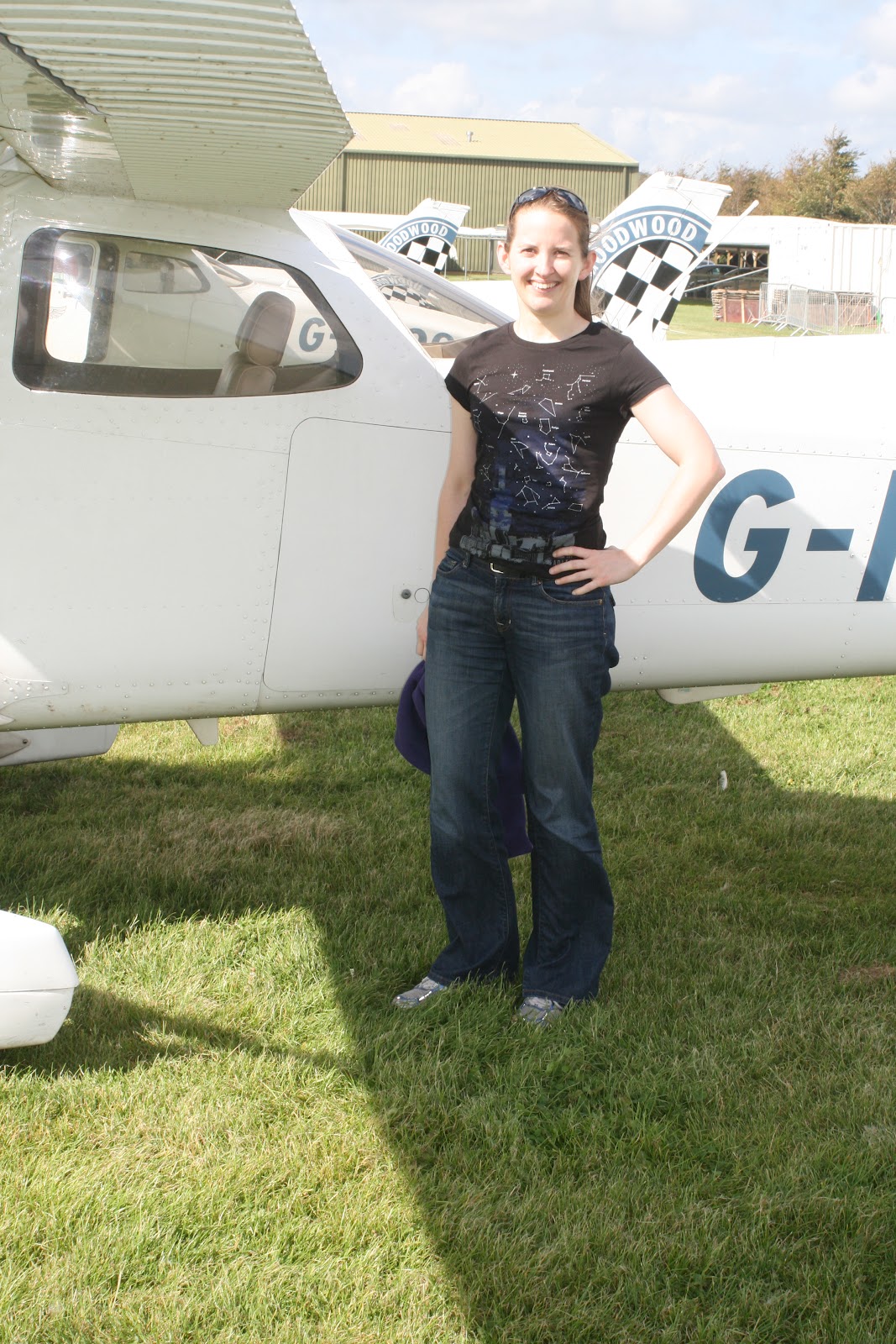
Today, I flew a Cessna Skyhawk, during a 30 minute flight experience, courtesy of Tesco clubcard vouchers!

I didn’t really know what to expect. When needing to spend some vouchers, this seemed to be the most fun option and I recently realised I had two weeks left before it expired. Thus, I arrived at the Goodwood Flying School, somewhat late, after underestimating the time to get there, being stuck behind a tractor, and finding their aerodrome somewhat difficult to navigate!

With those challenges behind me, I filled in one simple form and was taken straight out to the aircraft. My instructor, Graham, talked me through the various controls and screens, did all the checks, and after about 20 minutes we were off. A simple grass runway is all thats needed for these small planes to get airborne so we were soon over Chichester cathedral.

Chichester

As soon as we had reached height of about 1900m with speed of around 90mph, and he had demonstrated a couple of partial turns, I was allowed to take the controls. I was surprised at their sensitivity and how little there was to actually do. You could quite easily have no-one touching the controls and the plane would continue flying relatively smoothly (providing good weather conditions) for quite some time. I was guilty of twitching them a bit too often, wanting to feel how the plane reacted rather than needing to move.

Portsmouth

Soon we were over Portsmouth harbour, then I turned us left, pointing east along the south coast. I deliberately bent us right over Selsey, where I had been for Sir Patrick’s picnic a month earlier, before we then banked left and Graham took control again, to take us back in for landing.

A great experience, thoroughly recommended!

MSL “Curiosity” Landing event at the Natural History Museum, London

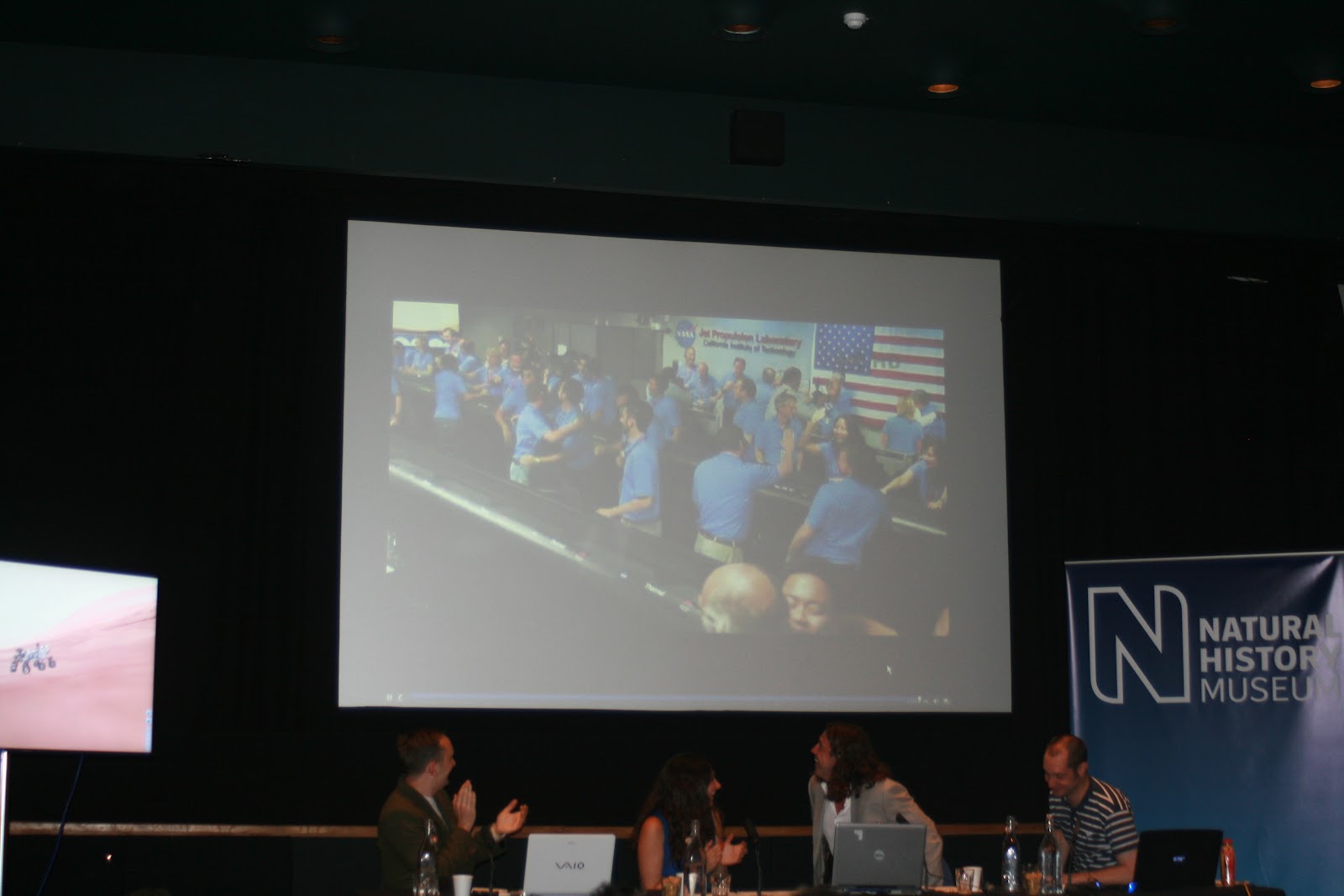
I joined a tense gathering at the Natural History Museum,
just before 6am on Monday 6th August, waiting to find out if the
Mars Science Laboratory (MSL) “Curiosity” would make it safely onto the surface
of Mars.
Experts Dr Peter Grindrod from UCL, Dr Joe Michalski from
the NHM annd Dr Matt Balme from the Open University were on hand as
our panel for the morning, to guide and educate us through the landing as it
happened.
Dr Peter Grindrod, Dr Joe Michalski, Dr Matt Balme
Having seen NASA’s “7
minutes of terror
” video multiple times, I was familiar with the timeline of
events. At 6:17am, the landing had already happened, but the nail biting
telemetry took an extra 14 minutes to be relayed back to Earth.

Amazingly, they received a low resolution picture from the rear
haz camera within minutes of landing. Photographic evidence that a wheel was
safely on the surface and the horizon appeared almost flat, confirmed that the
rover was alive, well, and appeared to have landed upright in a safe level
area.

This video shows the landing, via 297 frames retrieved from the Mars Descent Imager onboard Curiosity.
Talking after landing:
Michalski: “One thing, NASA missions always try to do is to decrease
the size of that landing ellipse. As we move towards bigger missions, perhaps a
sample return mission, we have to eliminate the uncertainty of landing, we need
precision landing.”
Balme: “As a scientist we want to go to places but the
engineers say you can’t go there, its too dangerous. Anything that’ll improve
accuracy means there will be more places that we can go.”
Curiosity descending via parachute, imaged by
the HiRISE Camera on Mars Reconnaissance Orbiter
Peter Grindrod then delivered his presentation.  After all the build up, it was great to hear
a presentation finally say “where Curiosity HAS landed!” and “where Curiosity
is!”, rather than hope and other sentiments to date.
Grindrod: “One of the reasons that Curiosity is so exciting
is the sky crane, the way it landed. There are two main reasons why this was so
important:
1)      As
Matt said, it allows us to land in a smaller region than ever before. This will
mean scientists can access more geologically interesting areas.
2)      Much
bigger mass in terms of payload was delivered to the surface, which will lead
to better bigger science than ever before. This may well be the next stage of
exploration.
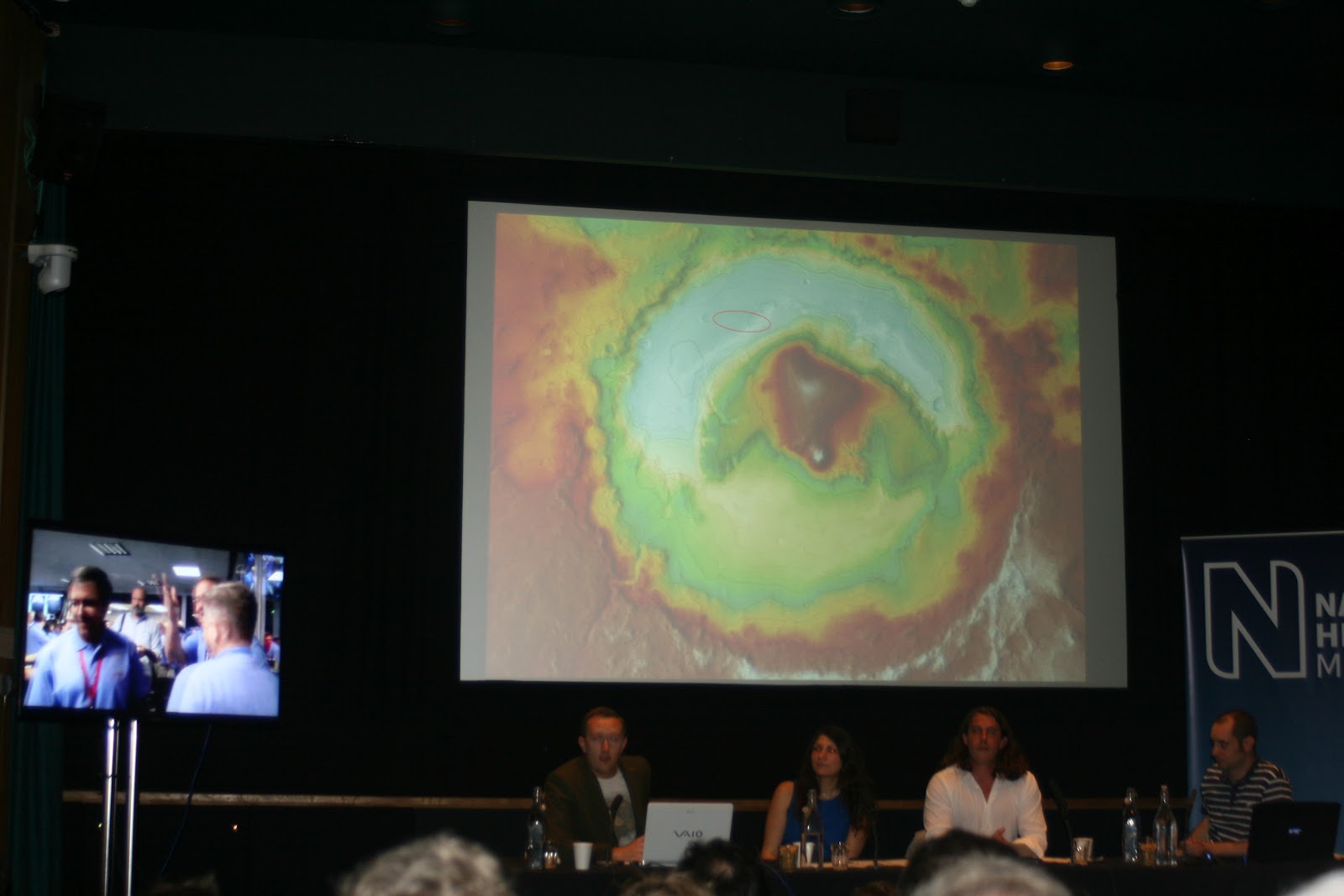
Gale Crater elevation map with landing ellipse
 I can safely say this is where Curiosity is on the surface
of Mars. This is Gale Crater, an elevation map, where the whites are high and
blues are low. You can see the landing ellipse in red, 7 x 20km, which is
similar to Camden Town, down to Thames at Westminster, from the Natural History Museum to Heathrow.
Gale Crater itself is 155km across. The reason we’re there, is the mound in the
middle, 5-6km of layered rock for Curiosity to explore.
No previous ellipses, Viking, Pathfinder, Phoenix were small
enough to safely land in this crater. We’ve known about Gale Crater for a long
time but just not been able to go there. The mound in the middle is about the same
size as the M25, but it would take MSL much longer to drive round the M25!”
“Bridget”, Astrium’s test rover
Ralph Cordey from Astrium, took the opportunity to tell us a little about their hopes for Exomars, and their test rover, Bridget, was on display.
An informative question and answer session followed, while everyone tried to comprehend what had just happened.  I think many of us had mentally prepared for the worst, and it took the rest of the day and the amazing images released from each new press conference that helped it slowly to sink in.
BBC News spoke to me briefly afterwards and a friend told me later I was on the lunchtime news! I stand by my quote: “Its going to be fantastic science for the next two years, its what NASA needed right now, a real win for them!”.
I include a selection of the interesting articles I have
read since the landing:
JPL live
video during landing.
The three
signals
Adam Seltzner needed to hear before they would declare landing
successful.
One of the first
images
after Curiosity’s mast went up and NASA’s image
gallery
.
How Curiosity hit the perfect
spot
on Mars.
Follow Curiosity
on Twitter. Or for some comedy, follow “Sarcastic Rover” on Twitter.
The women
behind Curiosity’s tweets.
Computer processing limitations.

Alpbach Summer School 2012

The 36th annual Alpbach Summer School took place from 24th July – 2nd Aug, in Austria’s “most beautiful village”. 60 students from across Europe were divided into teams of 15 to design missions to the outer planets. I was one of four UK students awarded a UK Space Agency scholarship to attend, where I was placed in the Orange team and we came up with the iTOUR Investigative Tour of URanus mission in 8 days.

Our team reports and presentations can be found here.

Credit: Summer School Alpbach 2012/M.A. Jakob

A summary of Alpbach tweets can be found here.